Muniz Residence

Inspired by Floreat's modernist heritage, the Muniz Residence combines climate-responsive design, thoughtful family planning and refined materiality to create a highly liveable home of exceptional value.

Muniz Residence
Floreat, Perth, Western Australia
TL;DR
Situated within the modernist suburb of Floreat, the Muniz Residence reinterprets the principles that defined some of Perth’s most successful post-war homes for contemporary family life. Through careful planning, climate-responsive design and a restrained palette of timber, concrete and steel, the home demonstrates how thoughtful architecture can deliver exceptional liveability, environmental performance and value without relying on excessive scale or budget.
Responding to a northern street frontage, the residence uses a carefully proportioned upper floor to allow winter sunlight to reach clerestory glazing above the main living spaces, filling the heart of the home with natural light. Distinct family and entertaining zones provide flexibility and privacy, while a lightweight upper-level construction, passive solar design strategies and durable material selections create a highly efficient residence designed for long-term performance. Inspired by Floreat’s modernist heritage yet unmistakably contemporary in its expression, the Muniz Residence demonstrates how intelligent design decisions can achieve outcomes often associated with significantly larger and more expensive homes.
Contemporary Modernism in Floreat
The Muniz Residence sits within one of Perth’s most architecturally significant suburbs. Originally developed during the post-war period and influenced by the nearby 1962 British Empire and Commonwealth Games, Floreat emerged as a showcase for modern Australian housing ideals. Open planning, environmental responsiveness, simple geometries and strong connections between indoors and outdoors became defining characteristics of the suburb’s architectural identity.
Rather than replicating the stylistic language of the era, the project seeks to uphold the values that made these homes successful in the first place. The residence embraces clarity of planning, passive environmental design and material honesty, reinterpreting these principles through a contemporary architectural lens. The outcome is a home that feels both modern and familiar, grounded in its context while responding to the realities of contemporary family life.
Designing with Climate
While the architectural expression appears restrained, the form of the residence is largely driven by environmental performance.
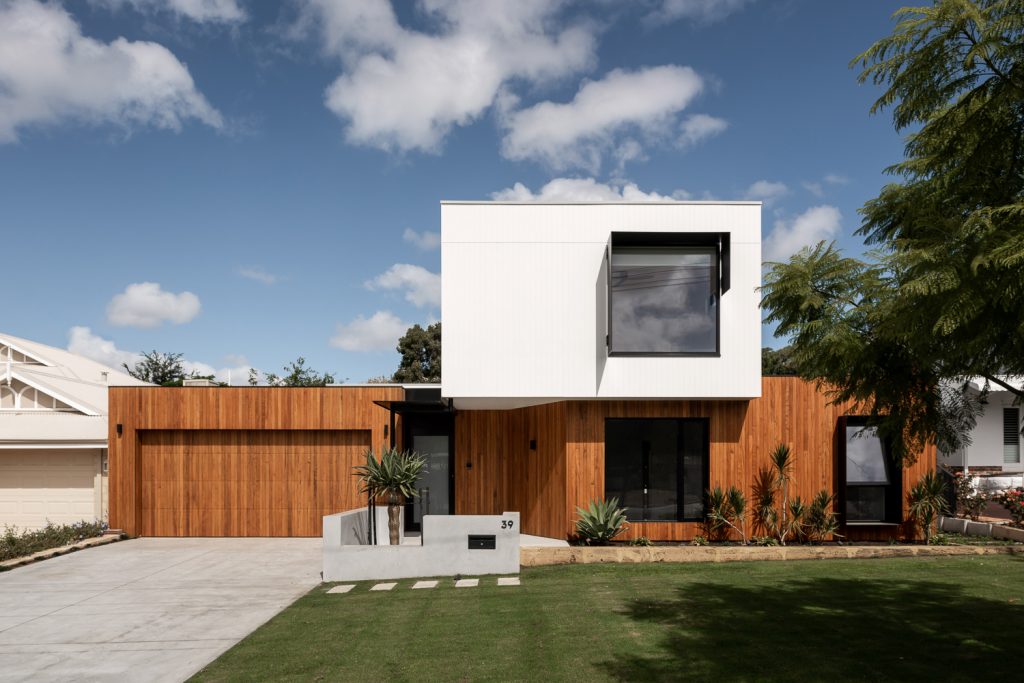
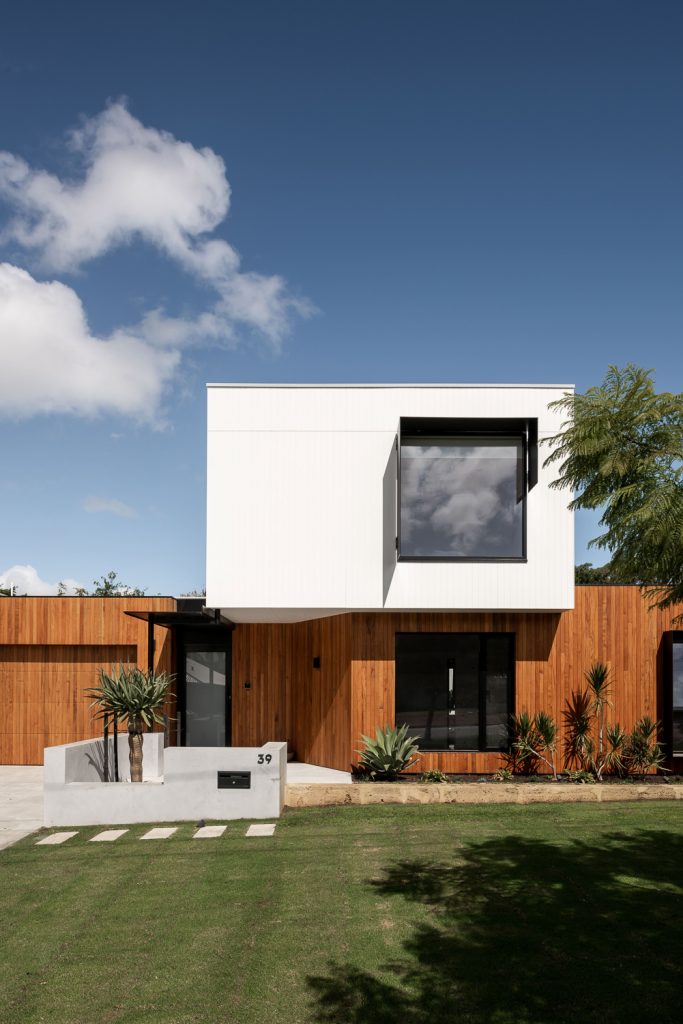
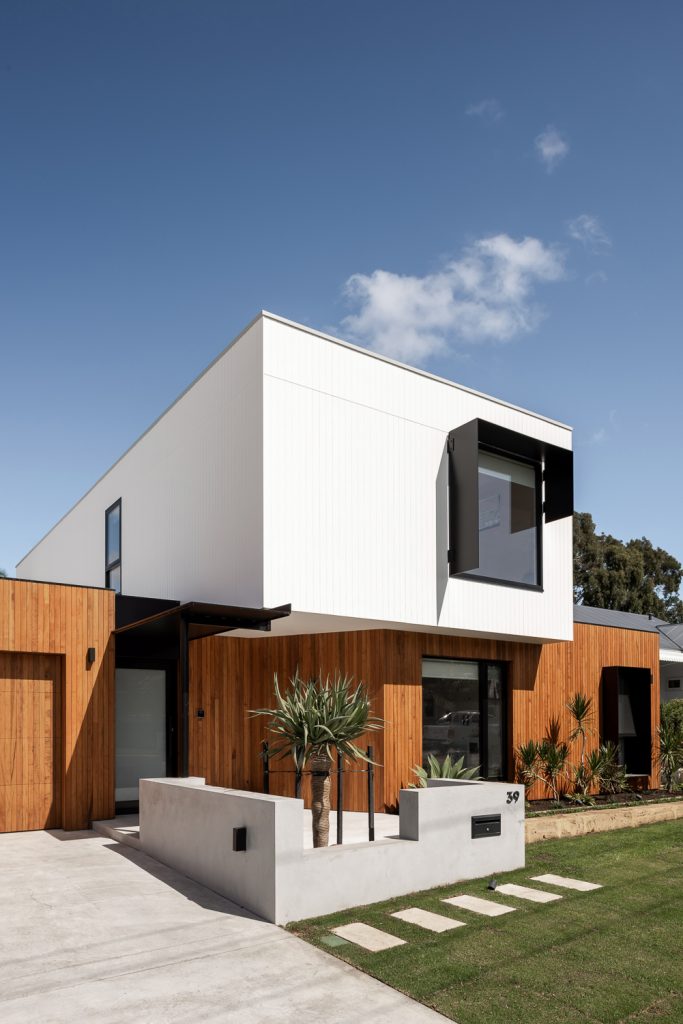
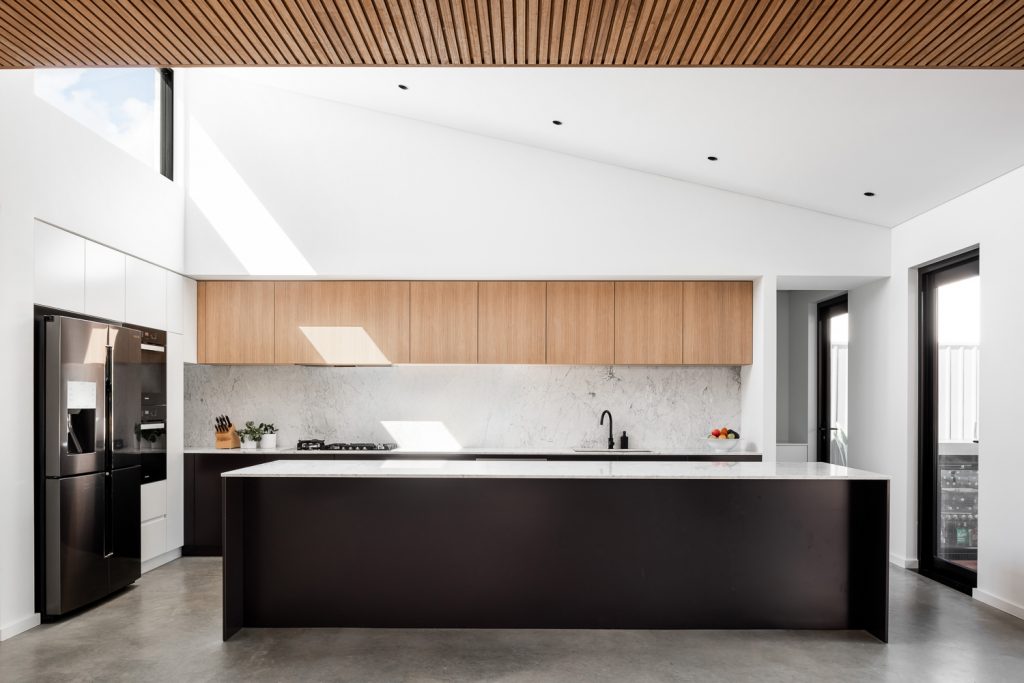
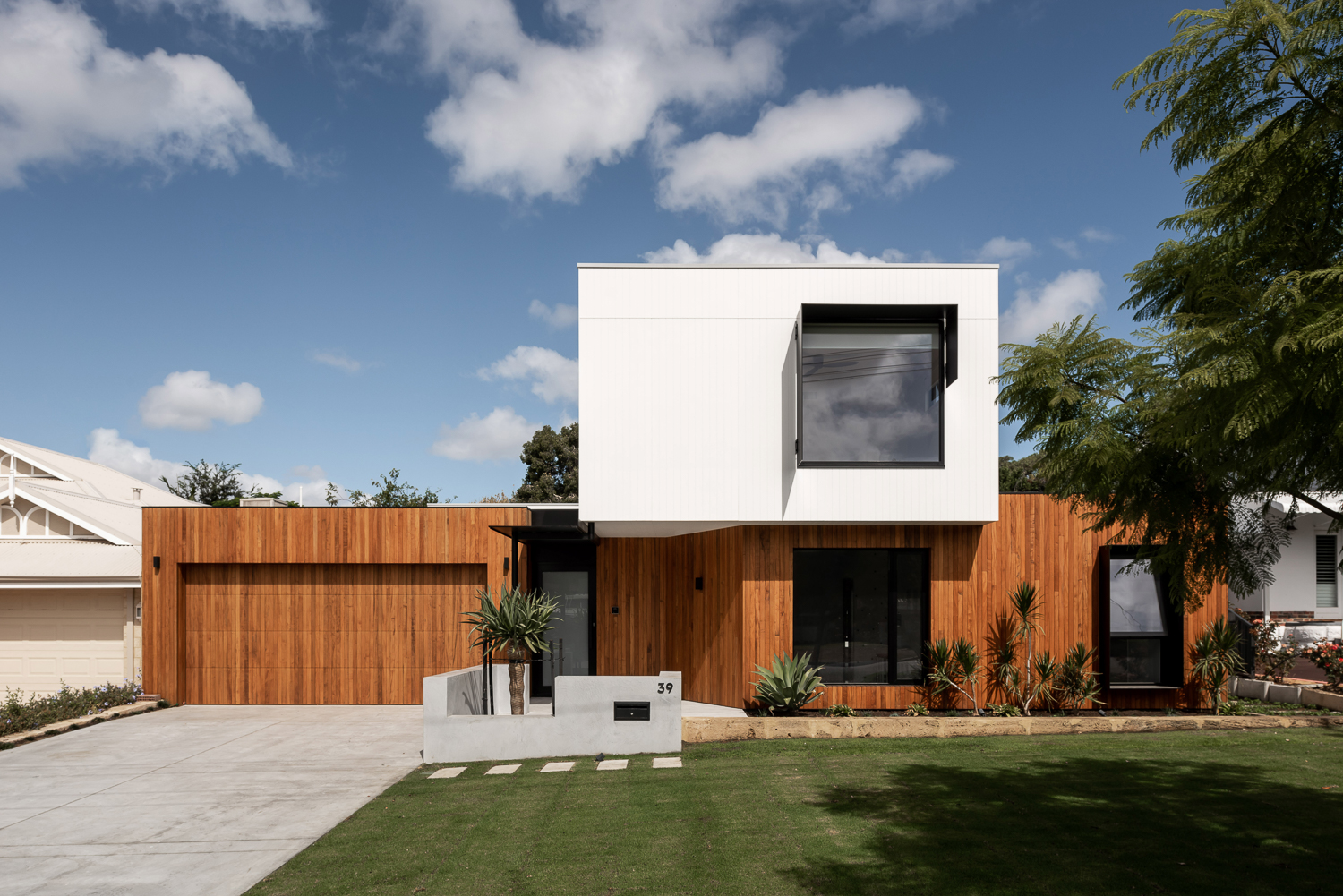
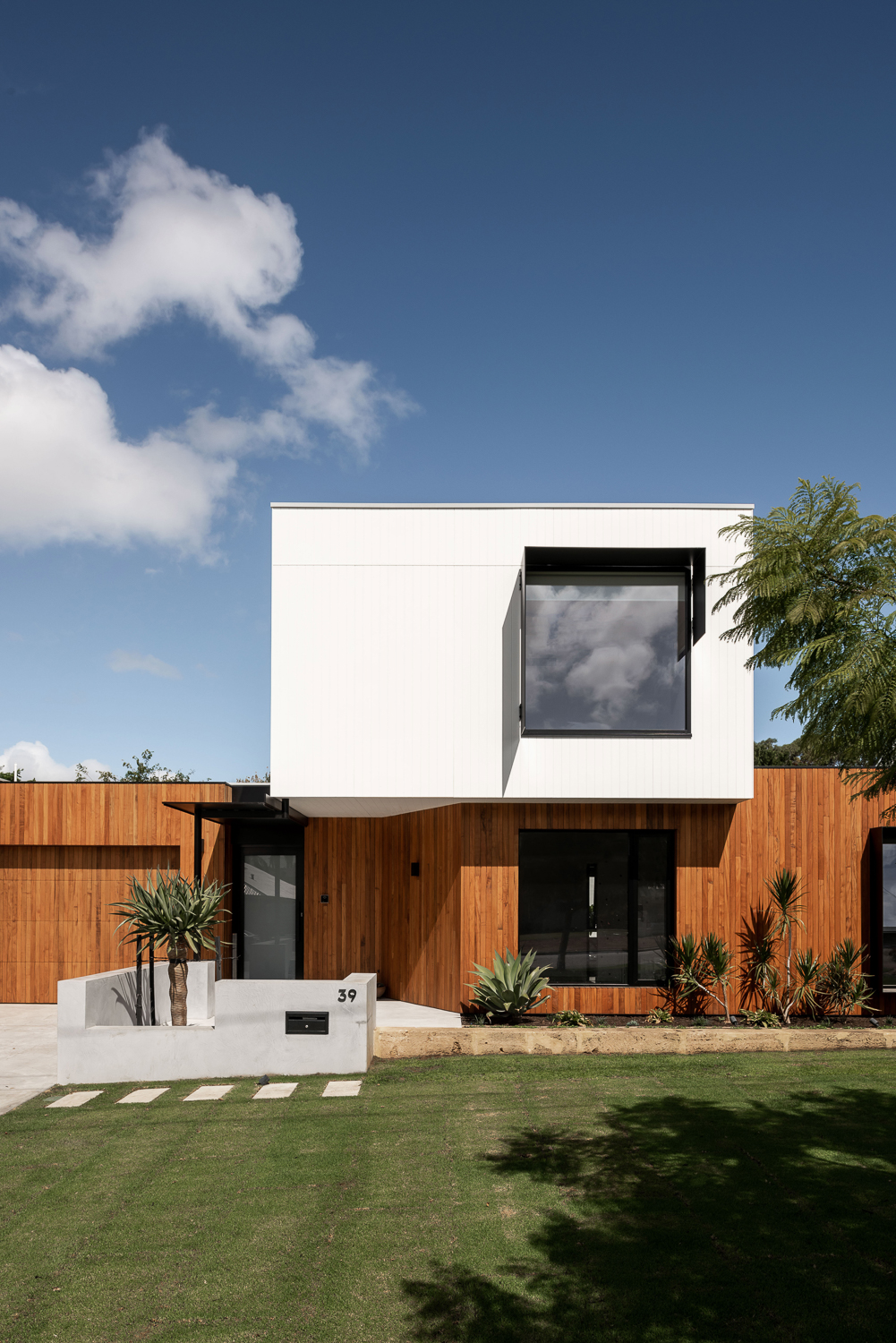
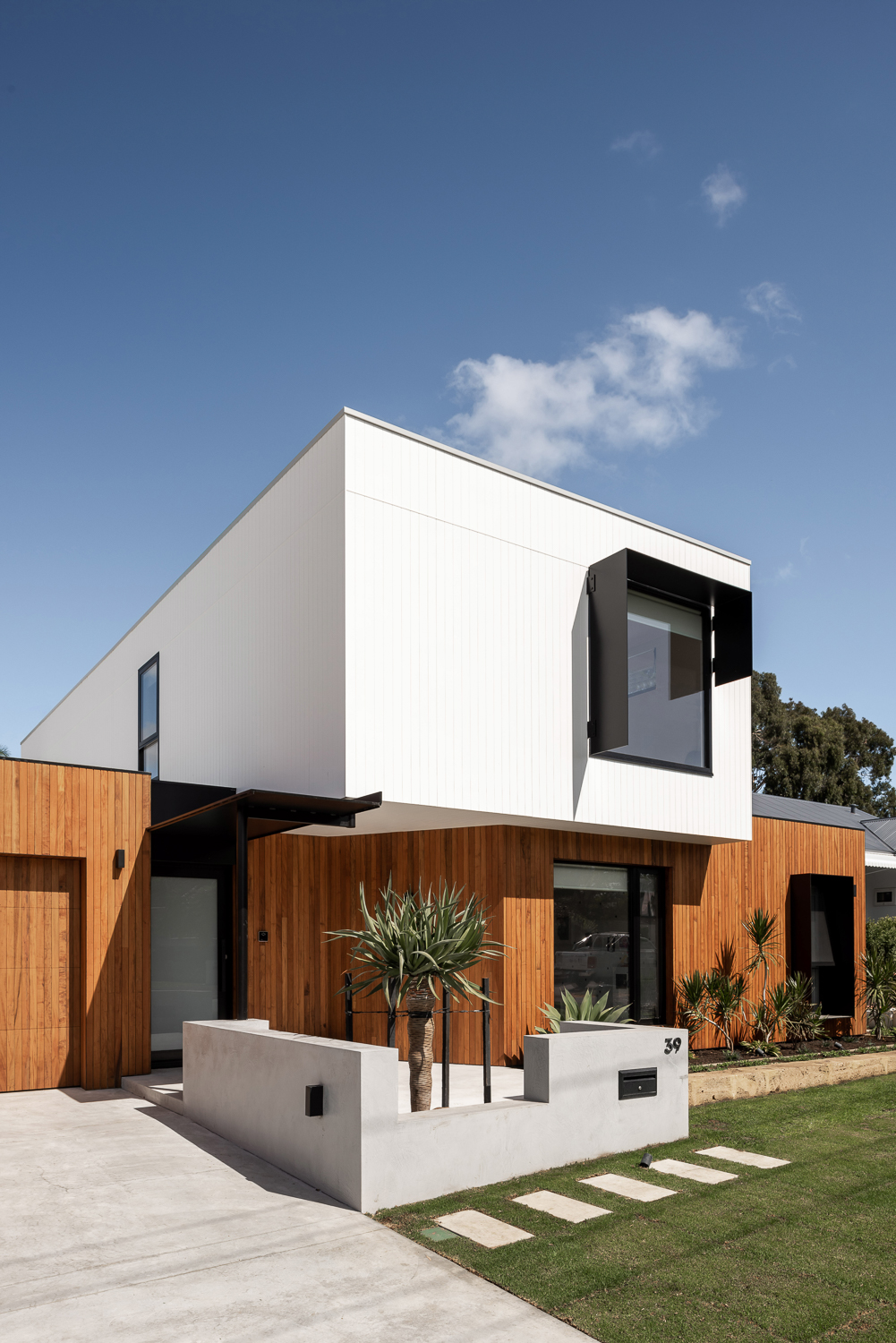
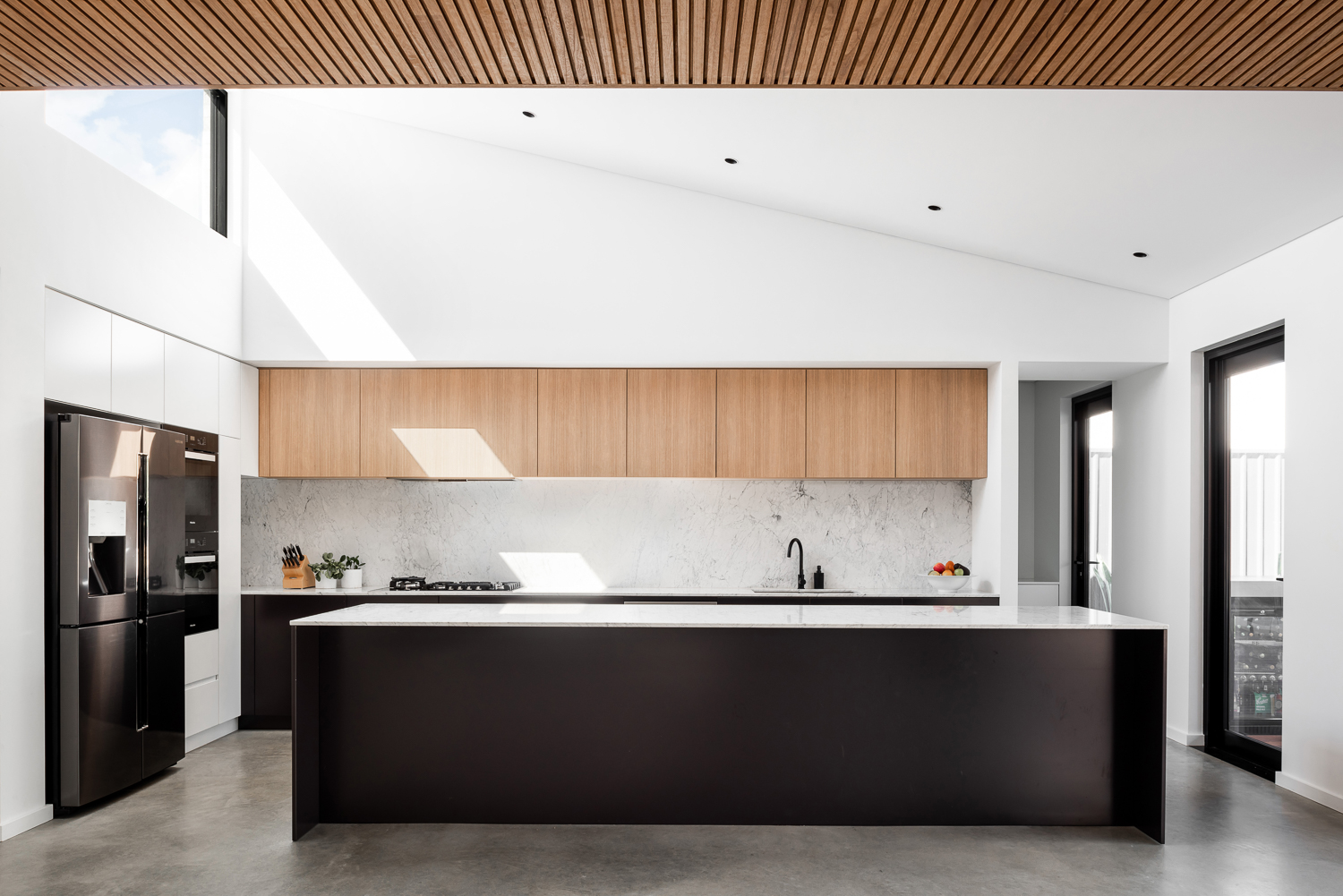
Facing a northern street frontage, the building is carefully shaped to maximise access to winter sunlight throughout the site. Rather than presenting a broad upper-storey mass towards the north, the narrow edge of the upper floor addresses the street. This significantly reduces overshadowing and allows sunlight to pass beyond the first-floor volume and into clerestory glazing positioned above the principal living spaces.
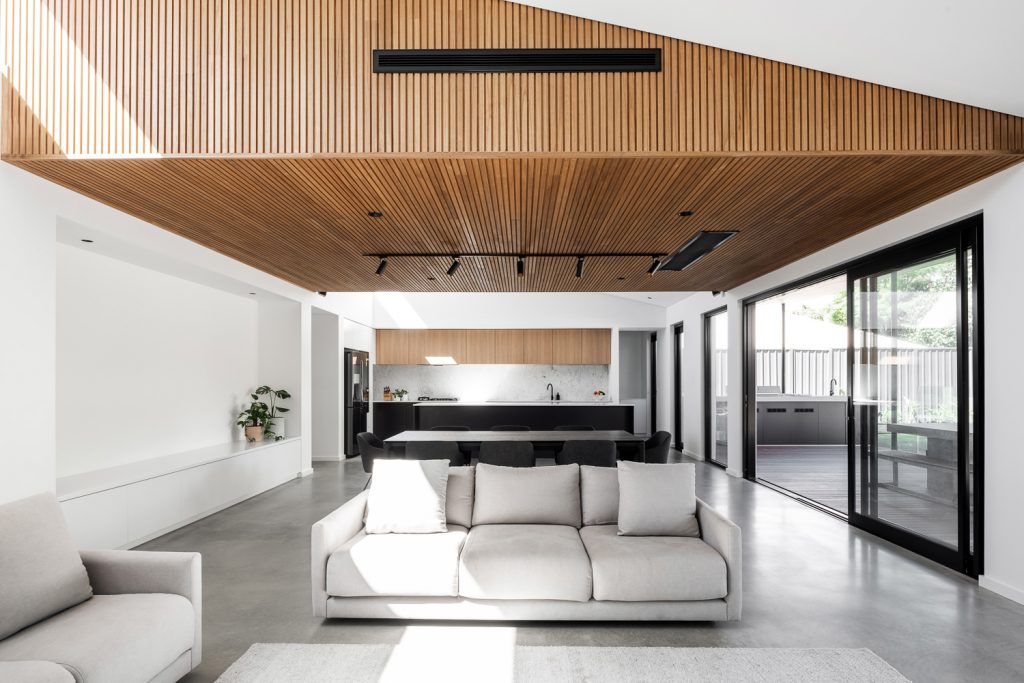
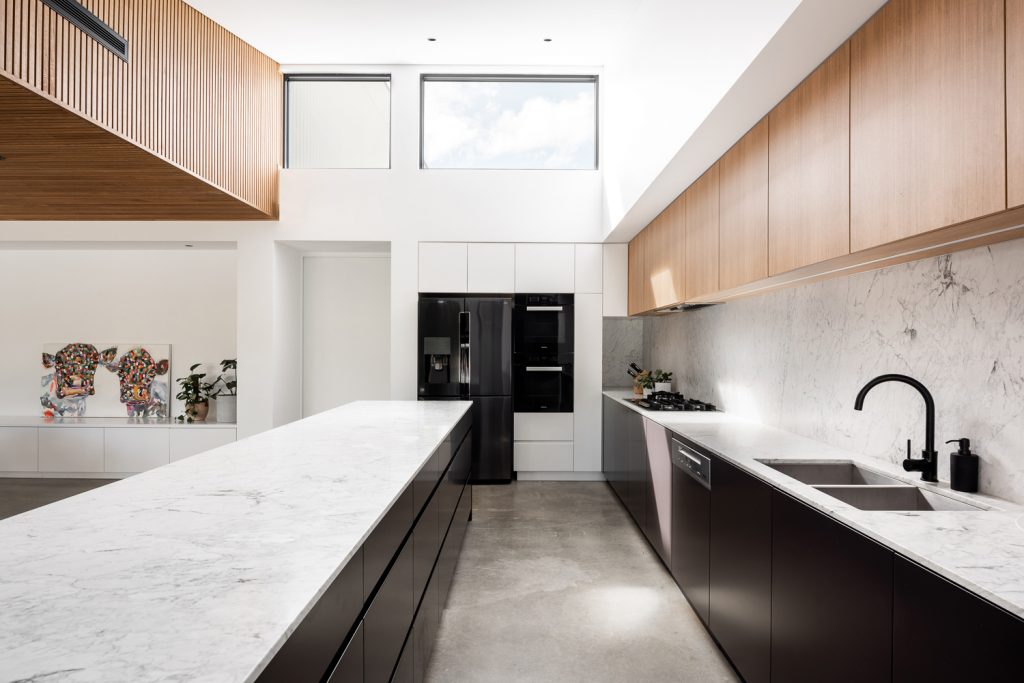
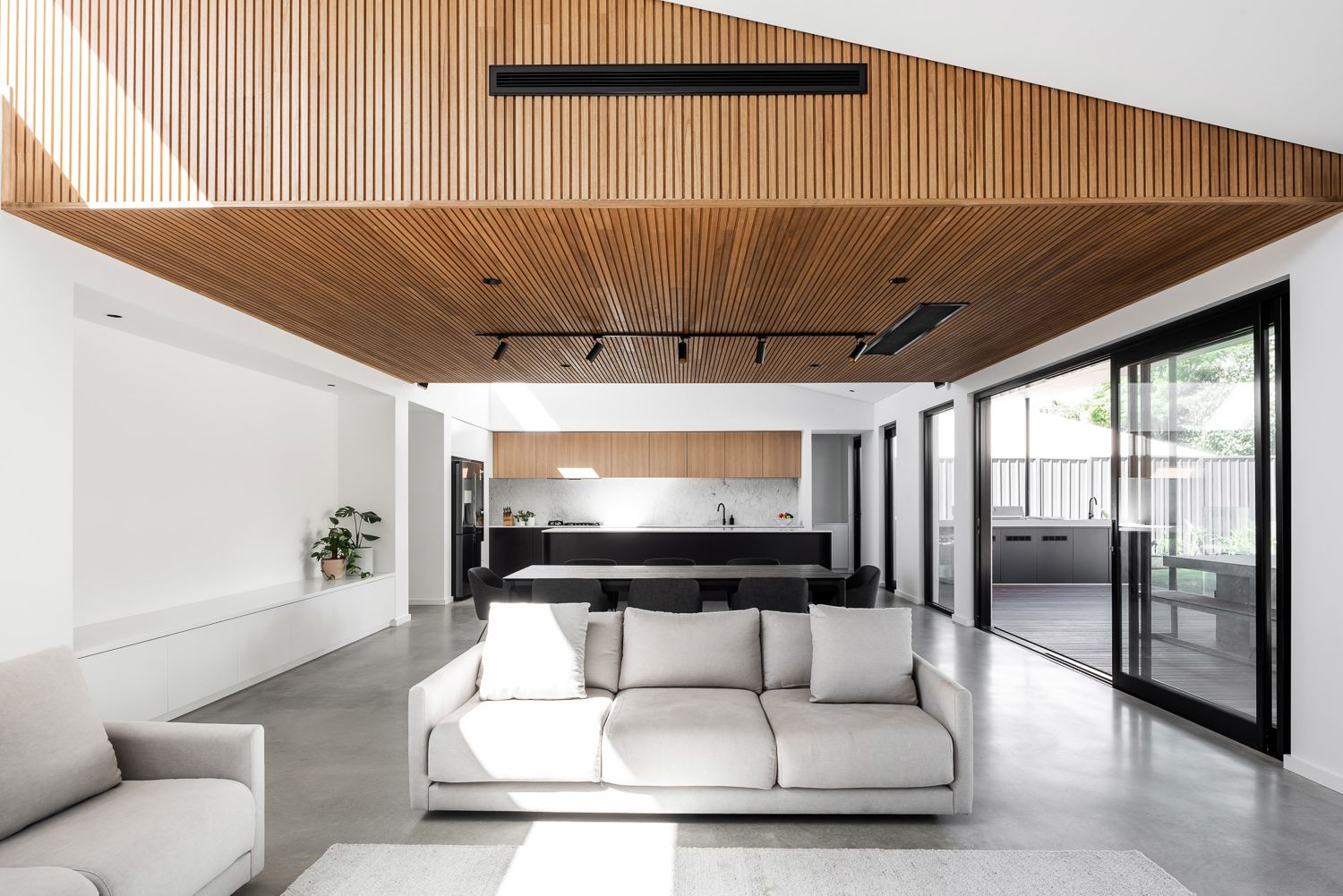
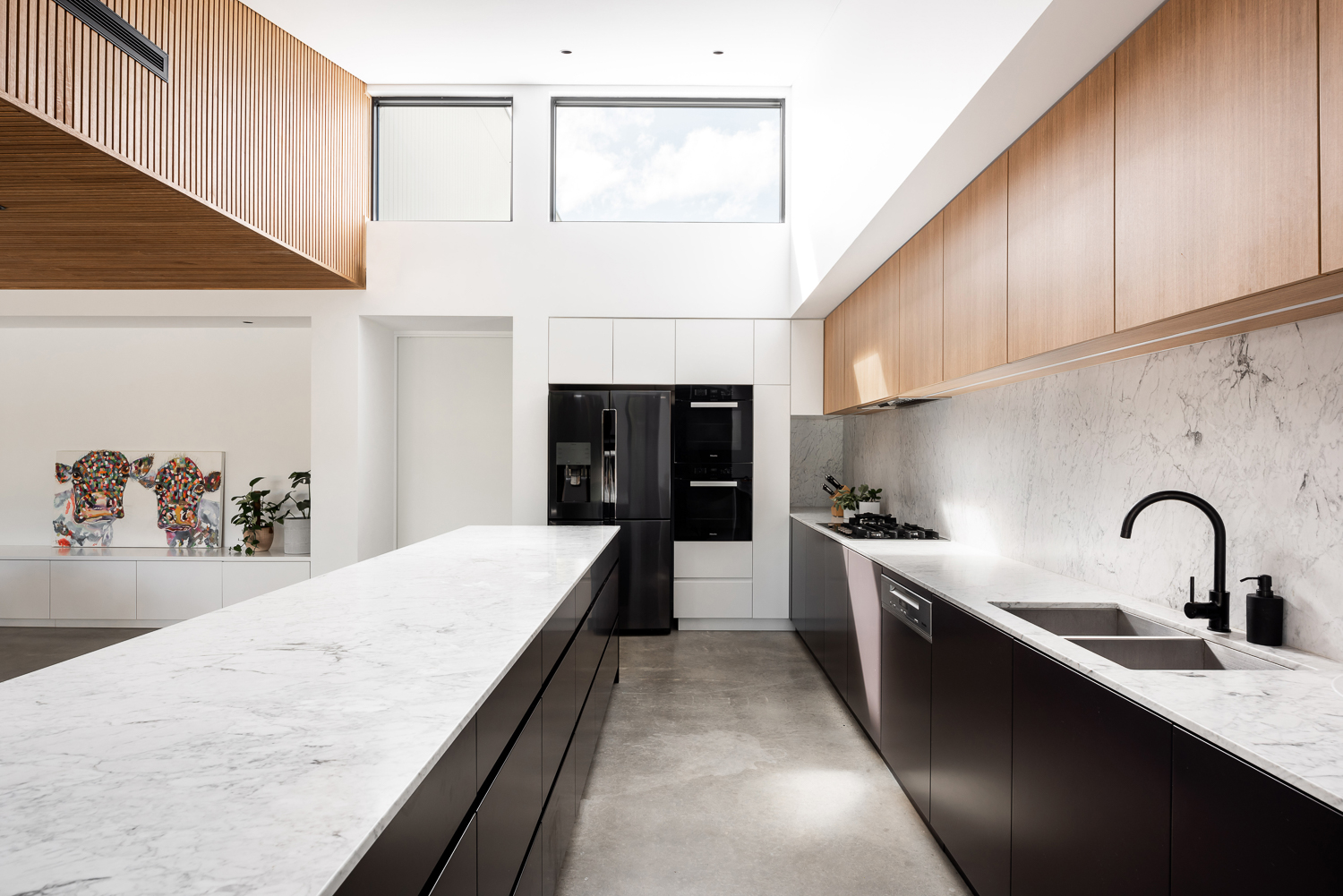
This strategy allows high-quality northern light to penetrate deep into the rear of the home, illuminating spaces that would traditionally rely heavily on artificial lighting. Throughout the day, sunlight washes across walls, ceilings and floors, creating interiors that feel warm, bright and naturally connected to the outdoors.
The upper level is constructed using lightweight framing rather than conventional masonry. This approach reduces structural loads, lowers embodied energy and delivers significantly improved insulation performance, contributing to a home that performs exceptionally well throughout the year while reducing the environmental impact of construction.
A Home Planned Around Family Life
The organisation of the residence is driven by a practical understanding of how modern families occupy their homes.
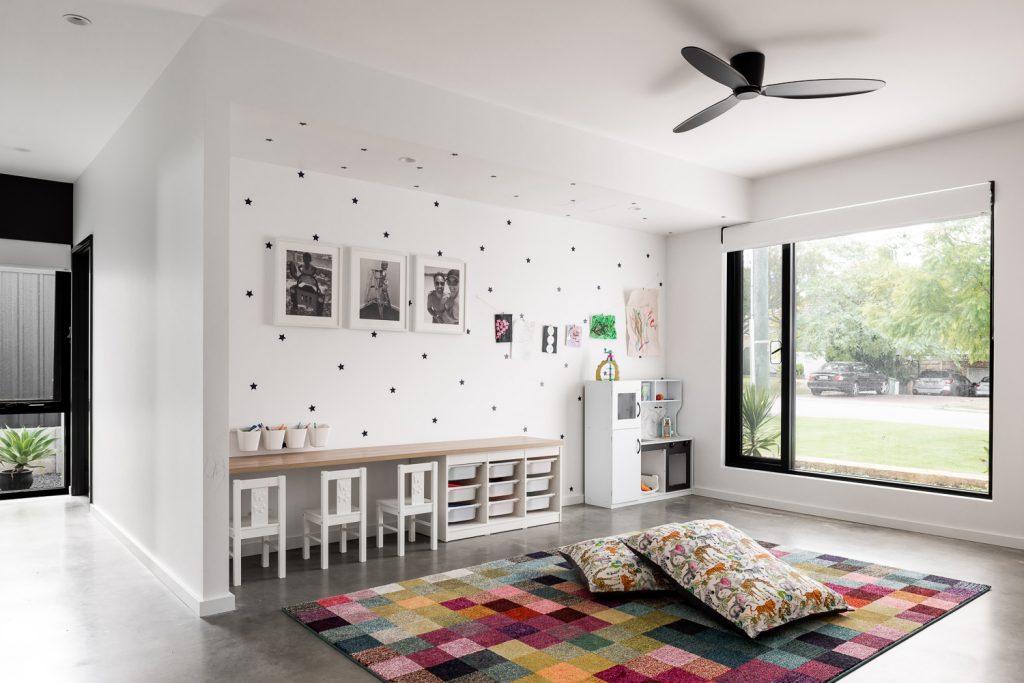
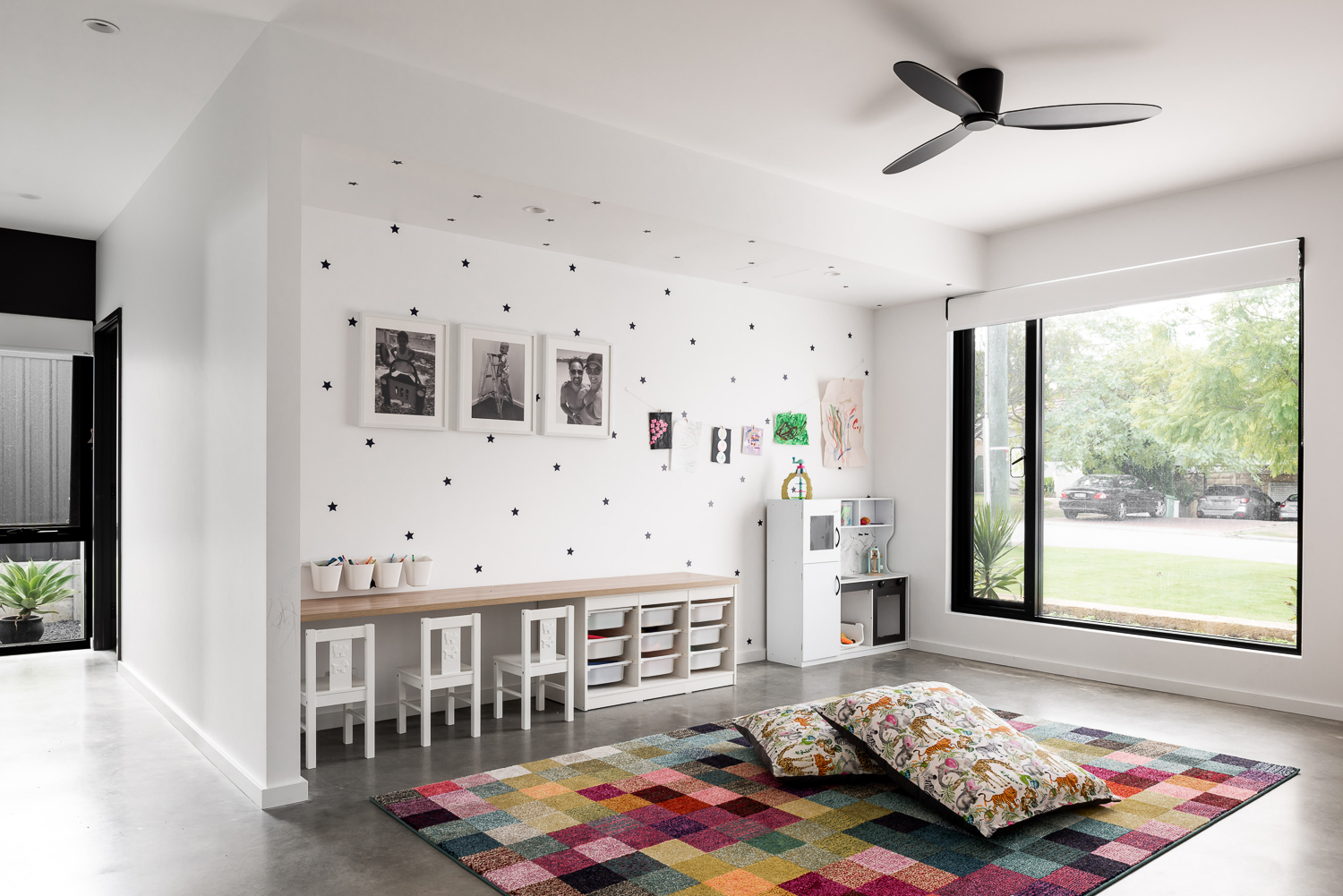
Positioned near the entry, a dedicated children’s wing combines three bedrooms, a shared family bathroom and a separate games room into a cohesive family zone. This arrangement provides independence for younger family members while maintaining close connections to the remainder of the house.
For entertaining, the entire wing can be easily separated from the central living spaces. The realities of family life can quite literally be concealed behind a single door, allowing guests to experience calm, organised entertaining areas while daily activities continue uninterrupted elsewhere in the home.
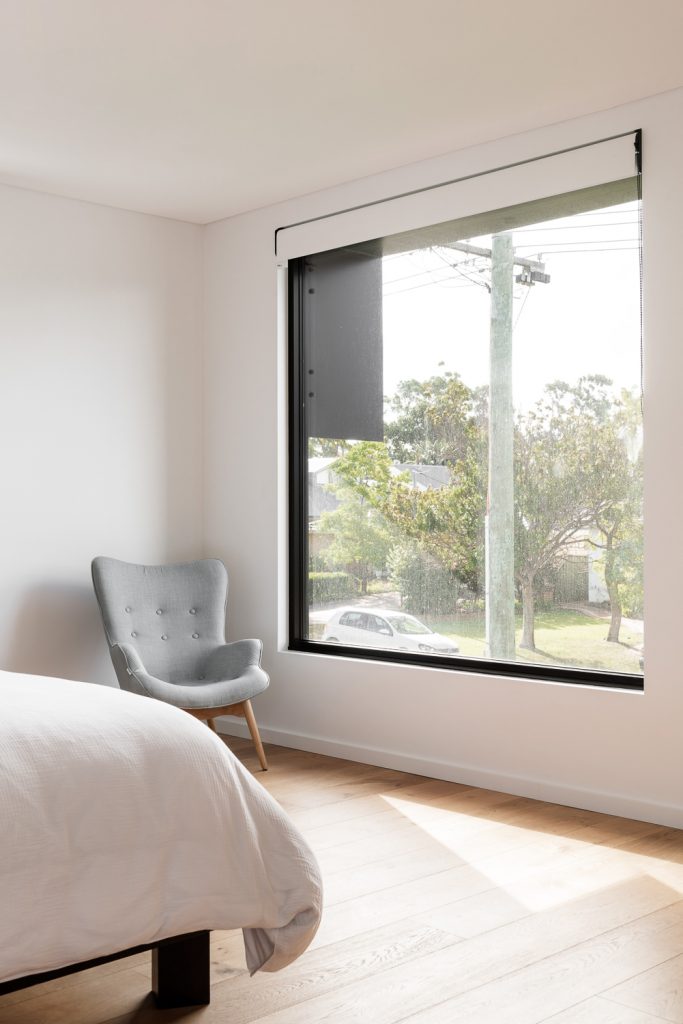
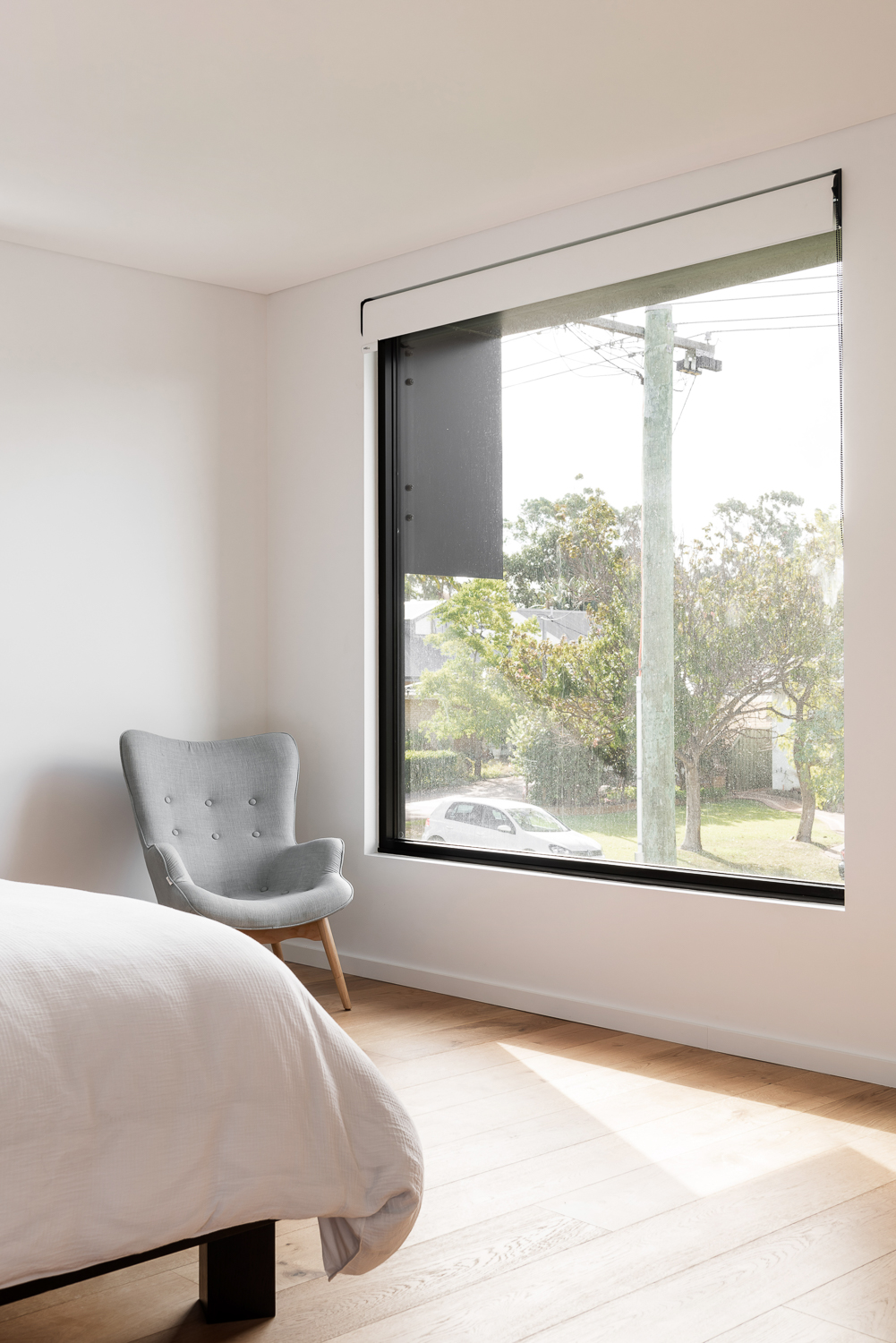
In contrast, the primary suite occupies the upper floor as a private retreat. Elevated above the activity of family life, it enjoys excellent acoustic separation, increased privacy and independent environmental control. Rather than simply creating a larger bedroom, this arrangement establishes a distinct parents’ zone that can operate independently from the rest of the residence.
Materiality, Light and Detail
Although the architectural form is simple and disciplined, considerable attention was given to materiality and detail.
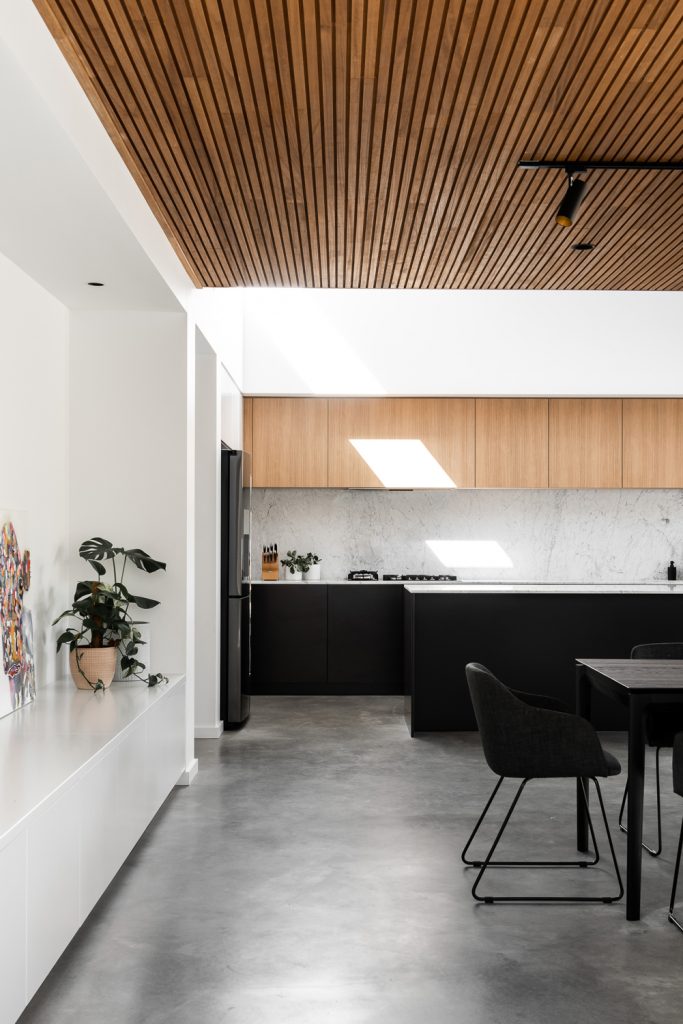
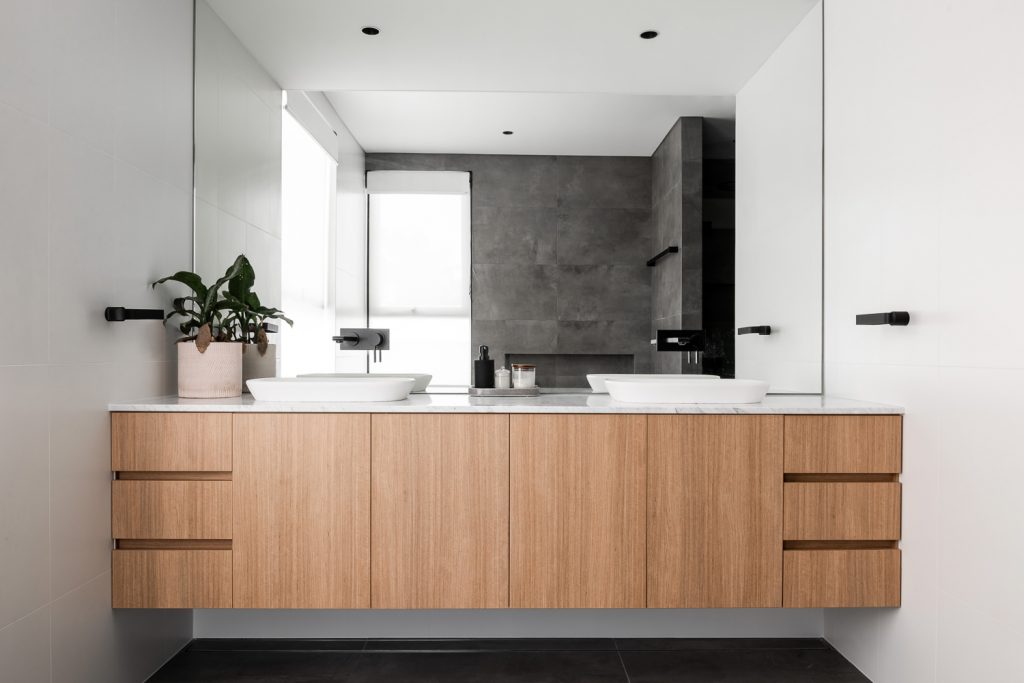
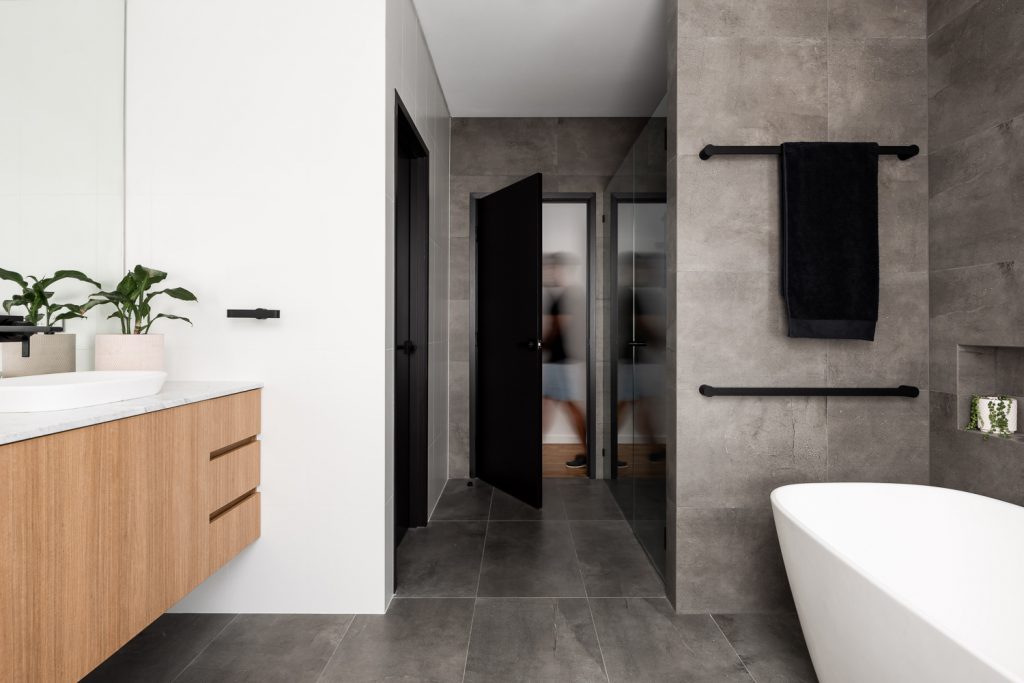
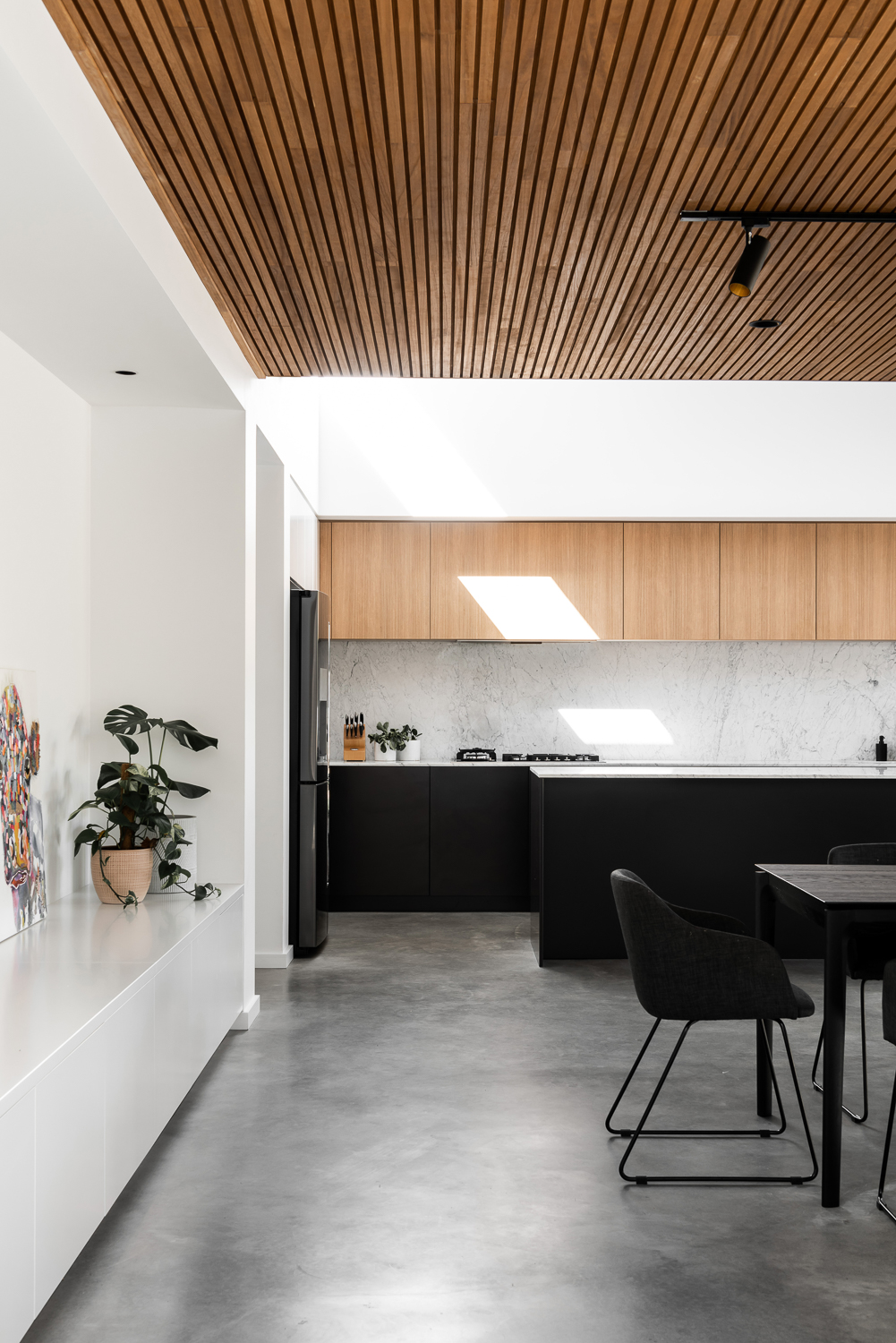
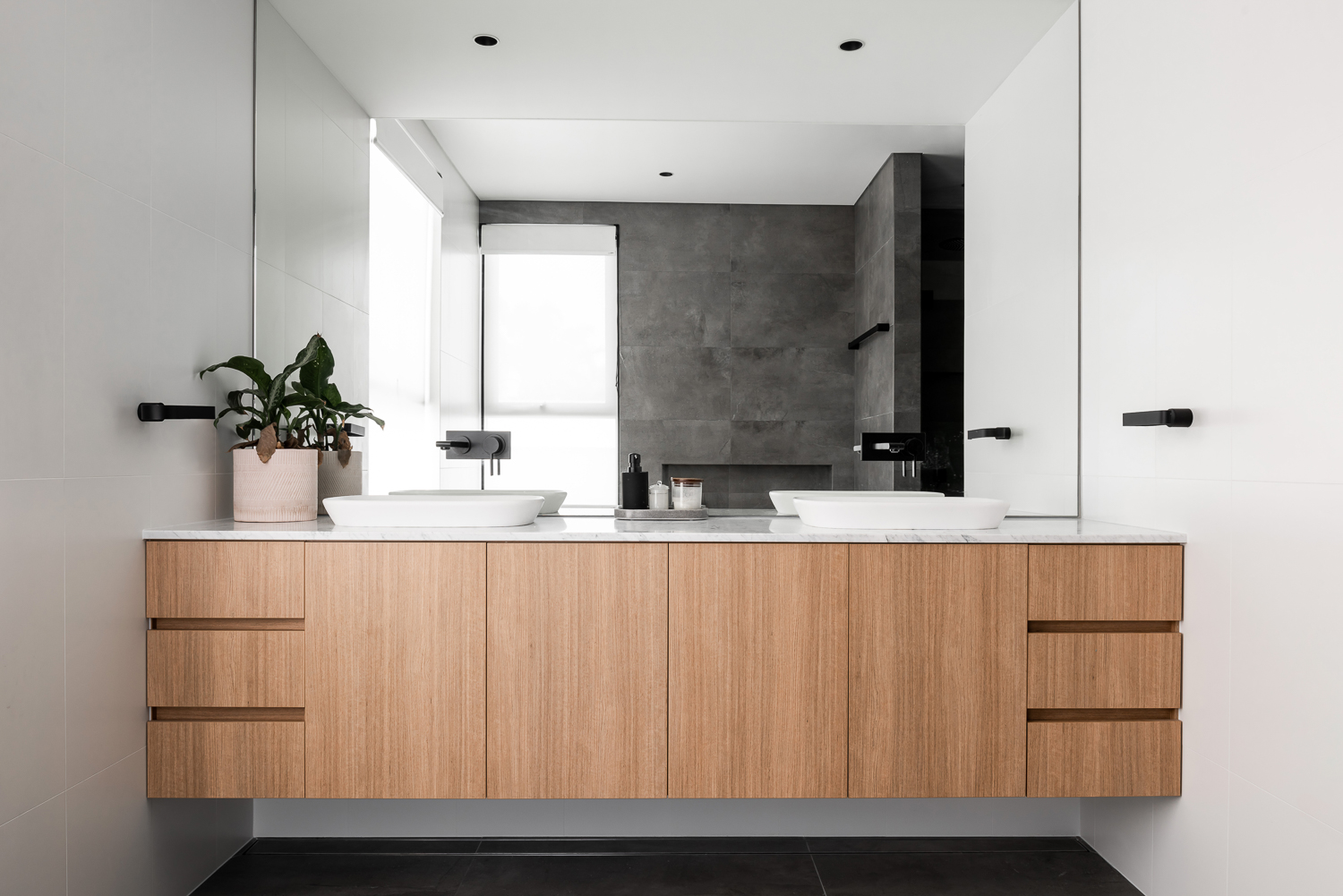
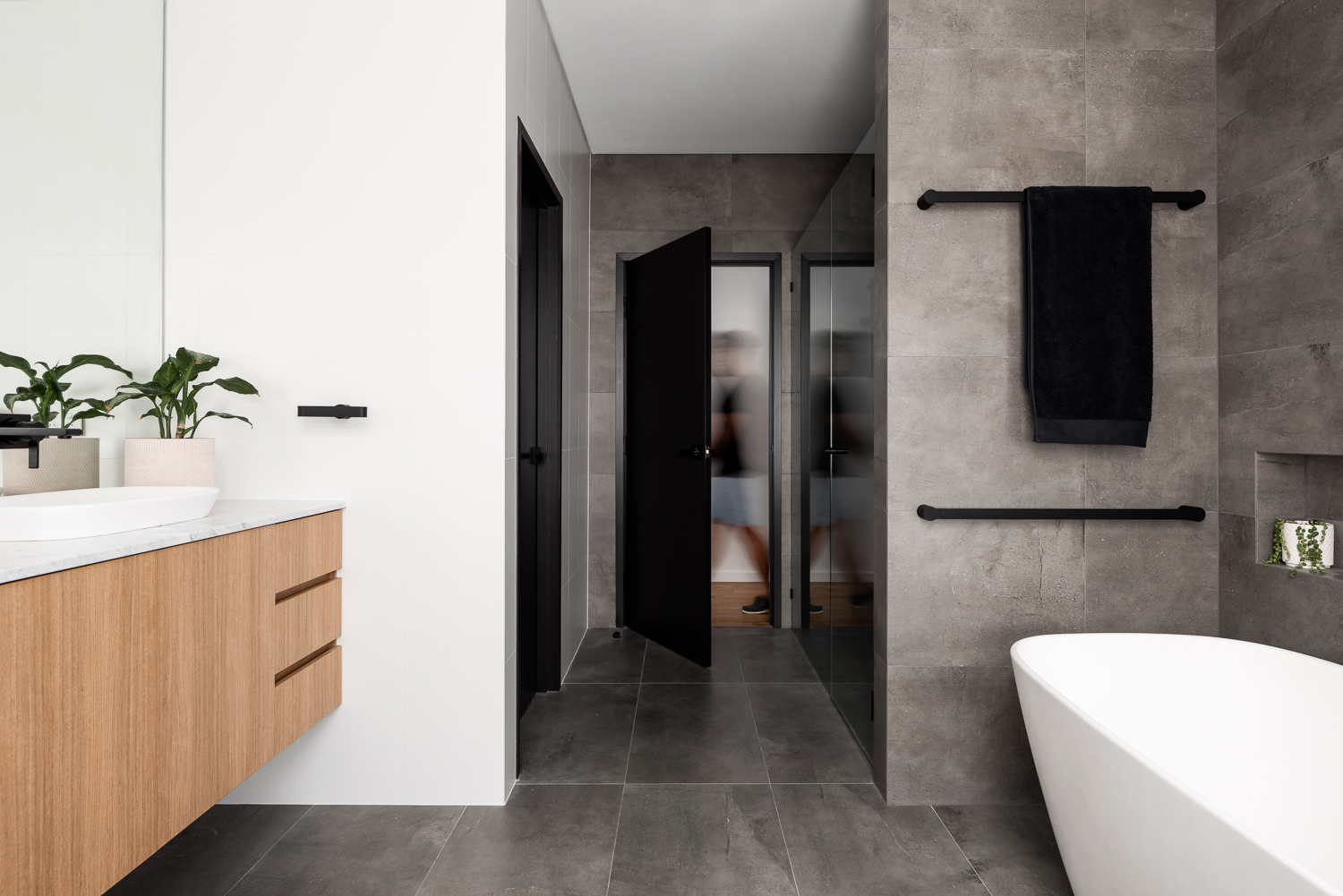
The building’s mass is softened by a carefully restrained palette of timber, concrete and shadow. Concrete elements ground the residence to its site, while timber introduces warmth and tactility throughout the home. Natural light plays a central role in shaping the experience of these materials, continuously changing the perception of texture, depth and atmosphere throughout the day.
Custom black steel sunshade elements articulate the street façade, providing solar protection while establishing rhythm, shadow and visual depth. Their refined profile references the elegant steel detailing found throughout many of Floreat’s mid-century homes while enhancing the building’s environmental performance.
The matching timber garage door integrates seamlessly into the material composition of the façade, helping transform what is often a visually dominant suburban element into an integral component of the architectural expression.
Crafted Moments
Throughout the project, carefully considered details provide moments of richness and delight without relying on excessive expenditure.
Within the main living space, a suspended Glosswood timber ceiling is positioned directly above the dining area. Rather than applying feature materials universally, timber is used strategically to define the social heart of the home, creating warmth, intimacy and a sense of occasion within the larger open-plan space.
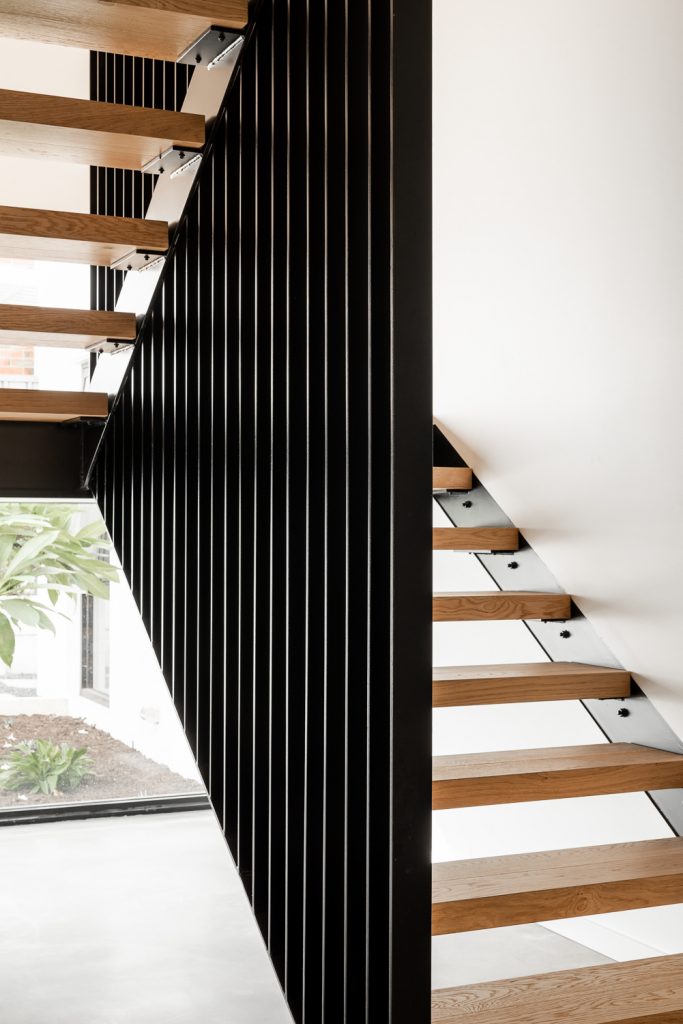
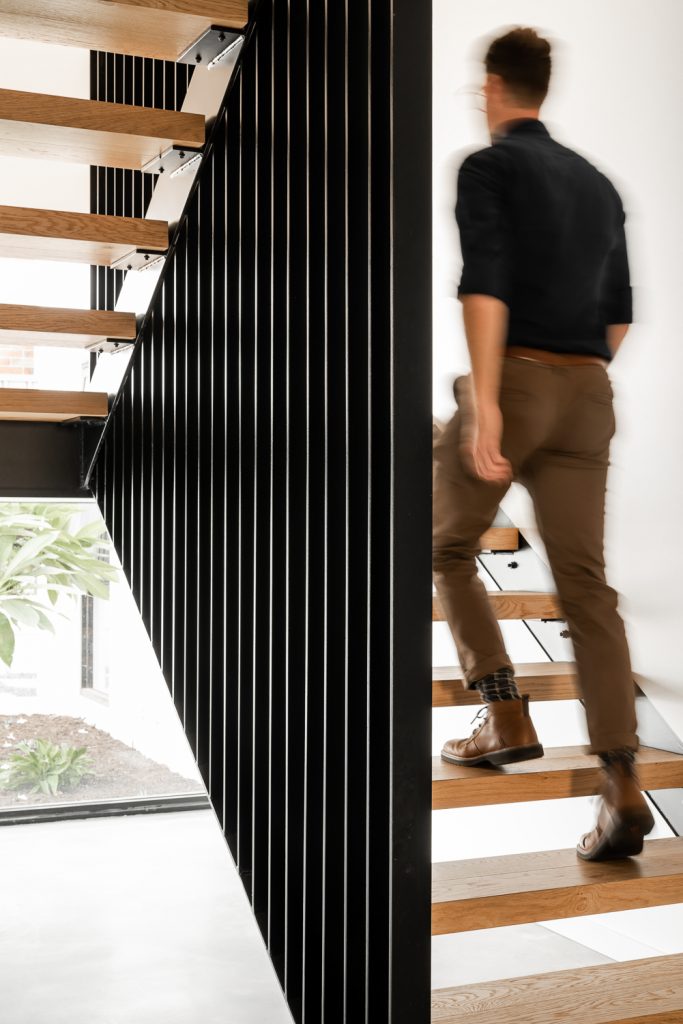
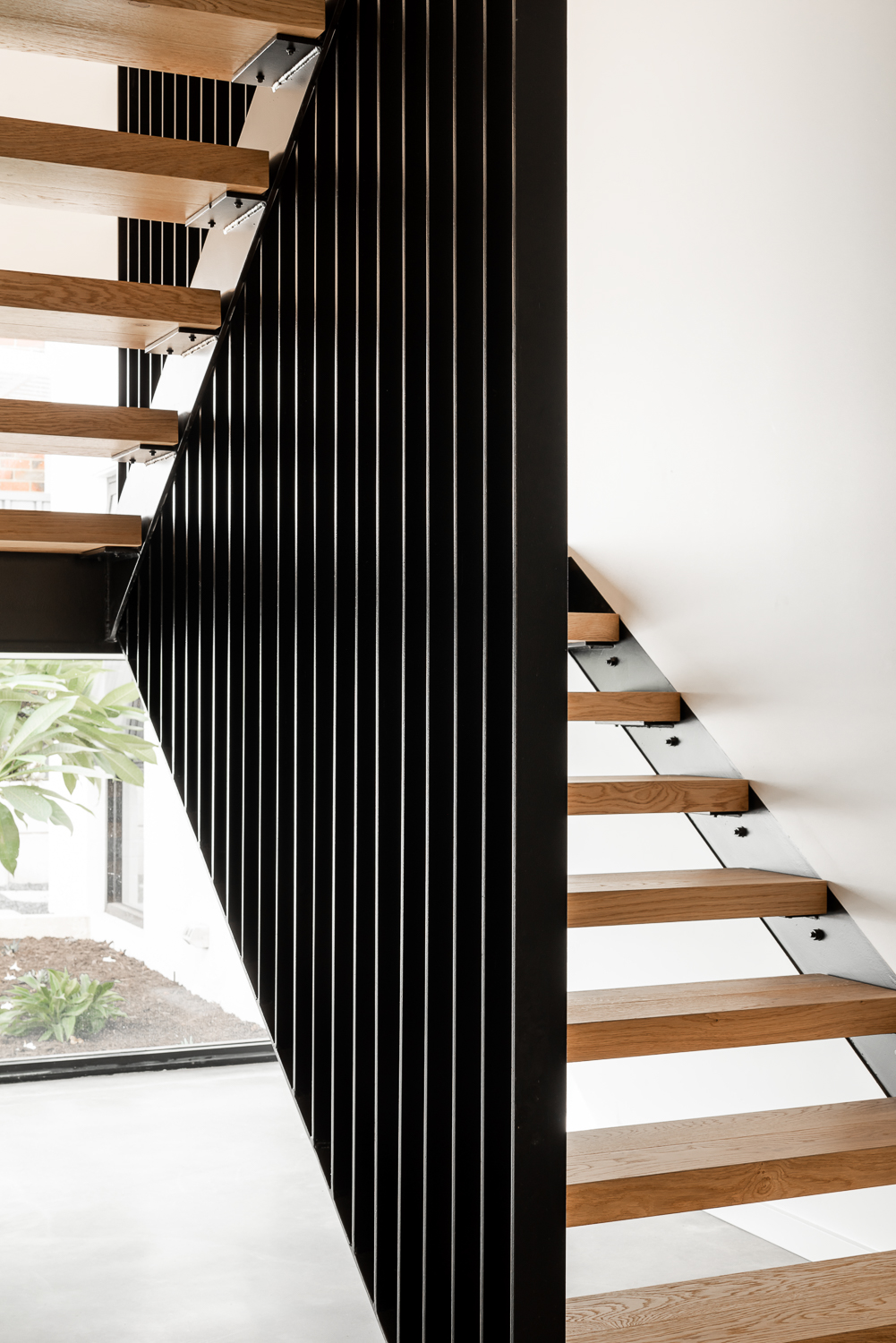
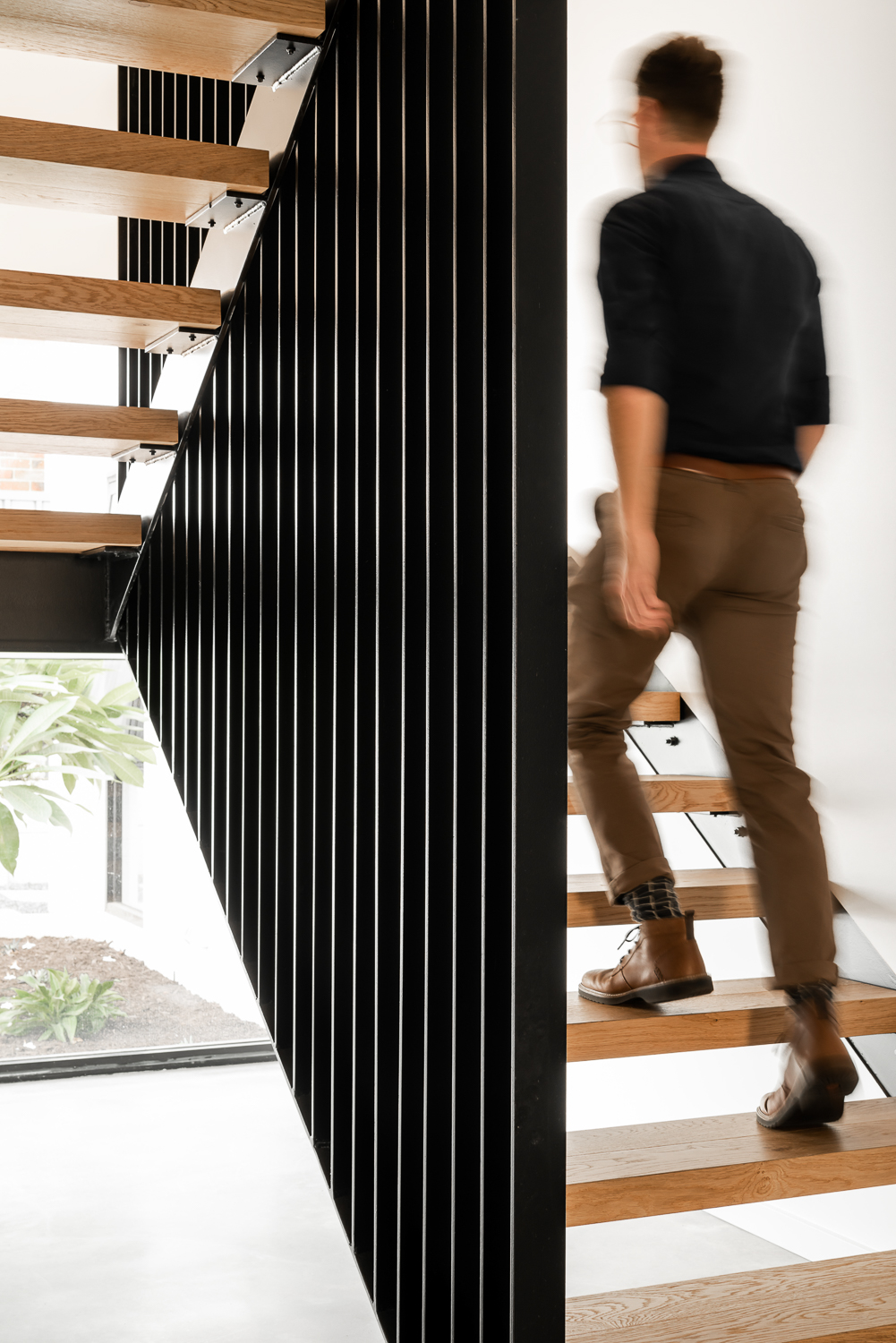
The influence of Floreat’s architectural heritage is perhaps most evident in the custom steel staircase. Drawing inspiration from the lightweight steel detailing found throughout many of the suburb’s iconic modernist homes, the stair acts as both circulation and sculptural centrepiece. Its open and transparent expression reinforces visual connections throughout the residence while paying homage to the area’s design legacy.
These moments demonstrate how targeted architectural interventions can elevate the experience of a home far beyond their physical scale.
Luxury Through Restraint
One of the most successful aspects of the project is its ability to achieve a refined architectural outcome through intelligent decisions rather than unnecessary complexity.
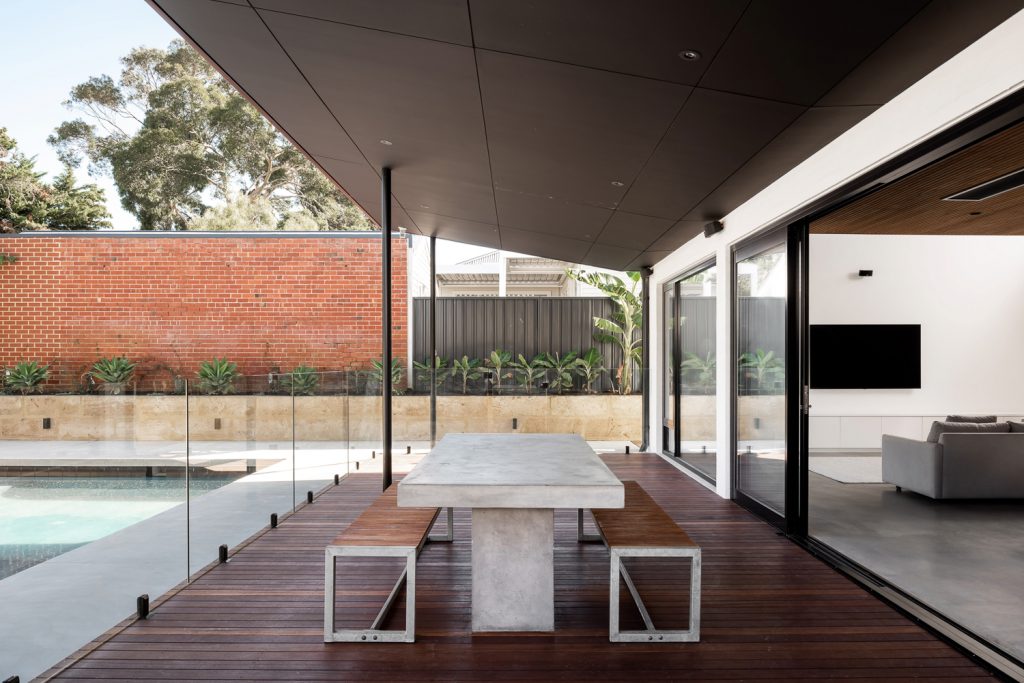
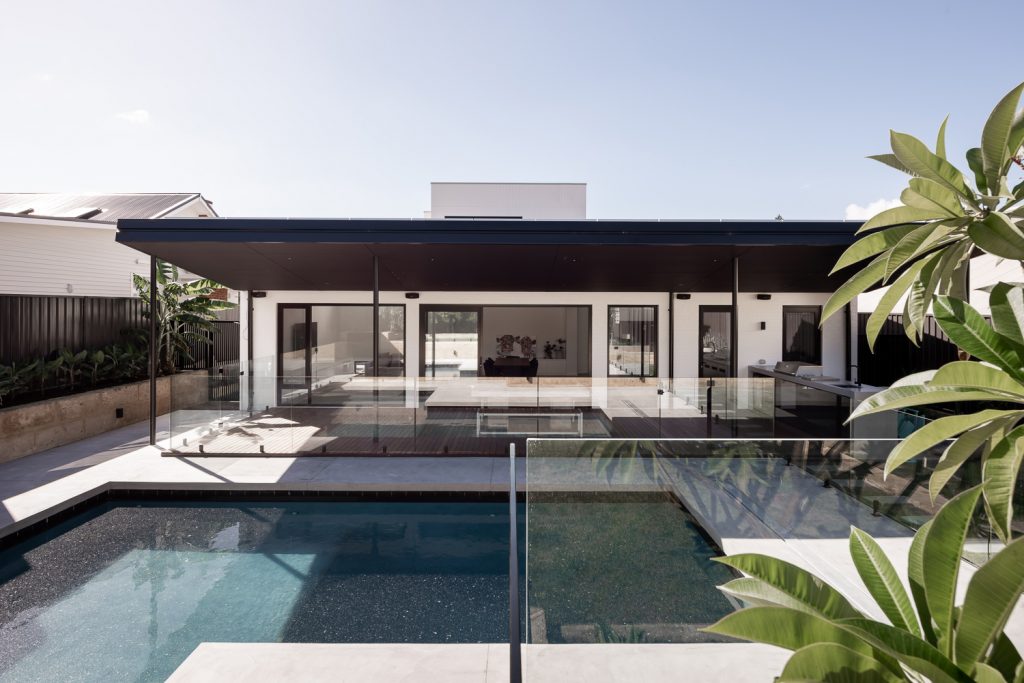
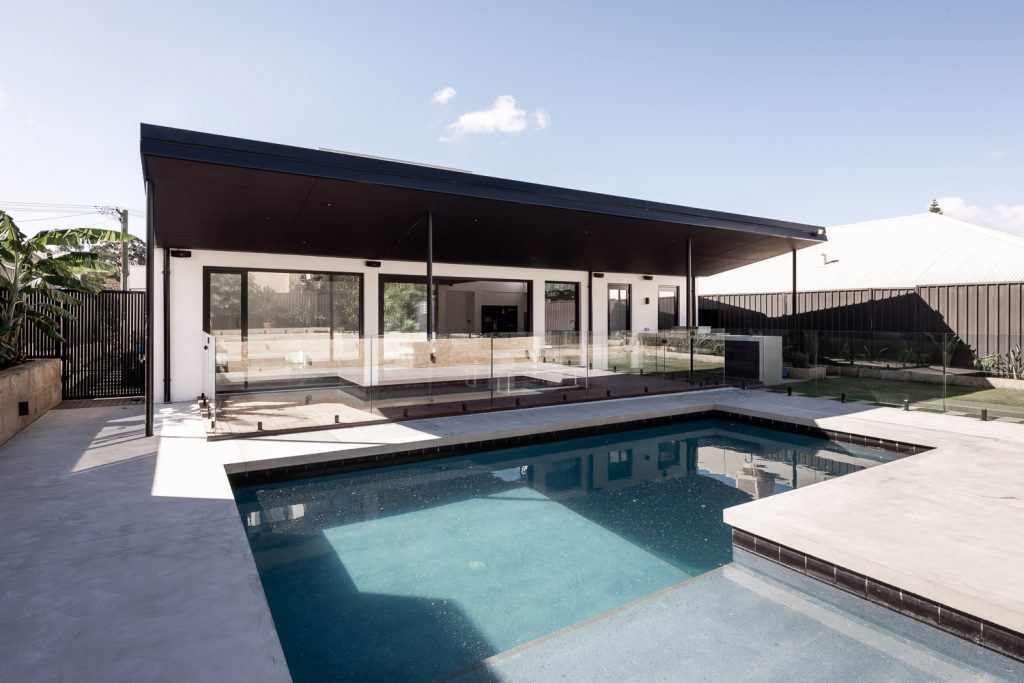
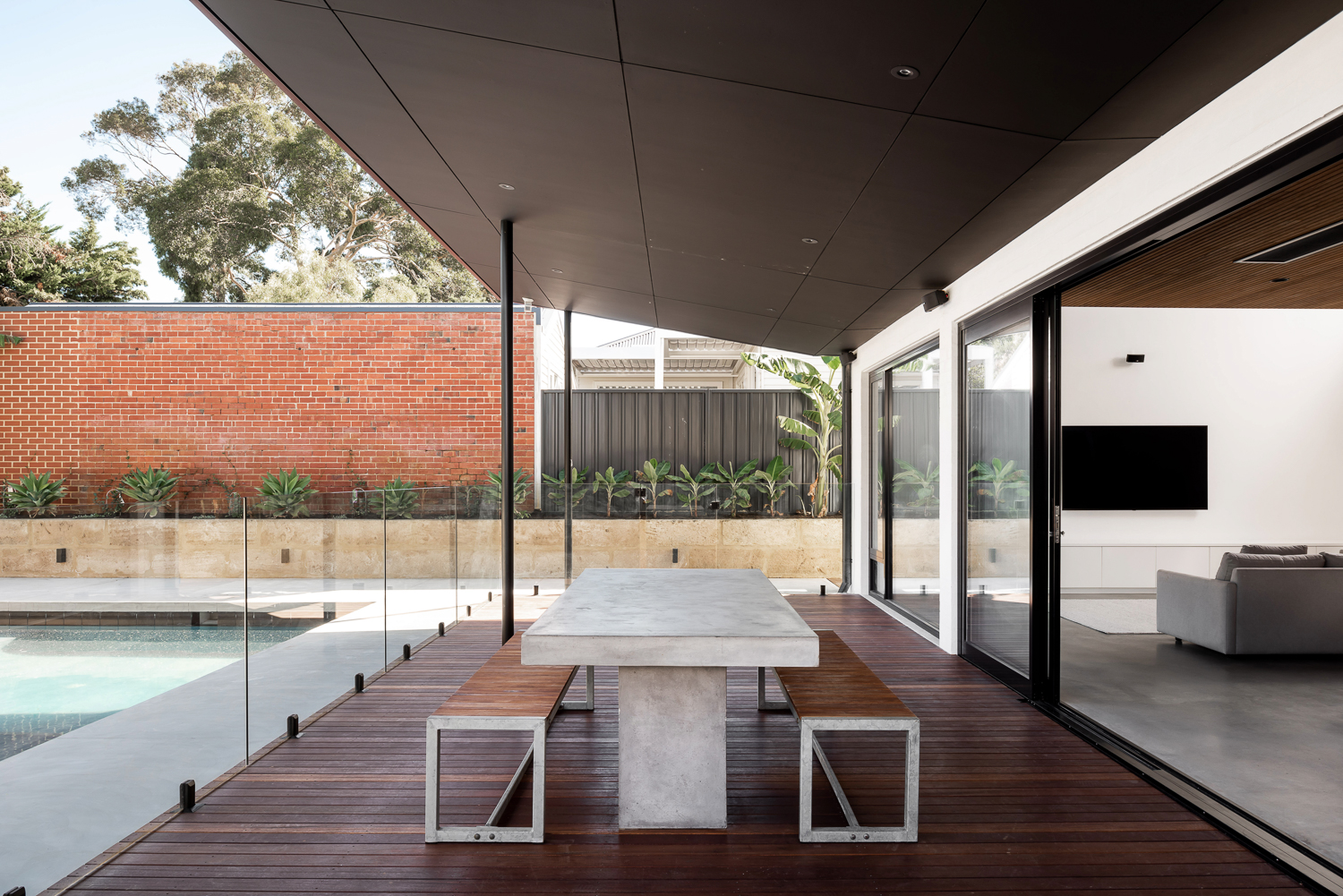
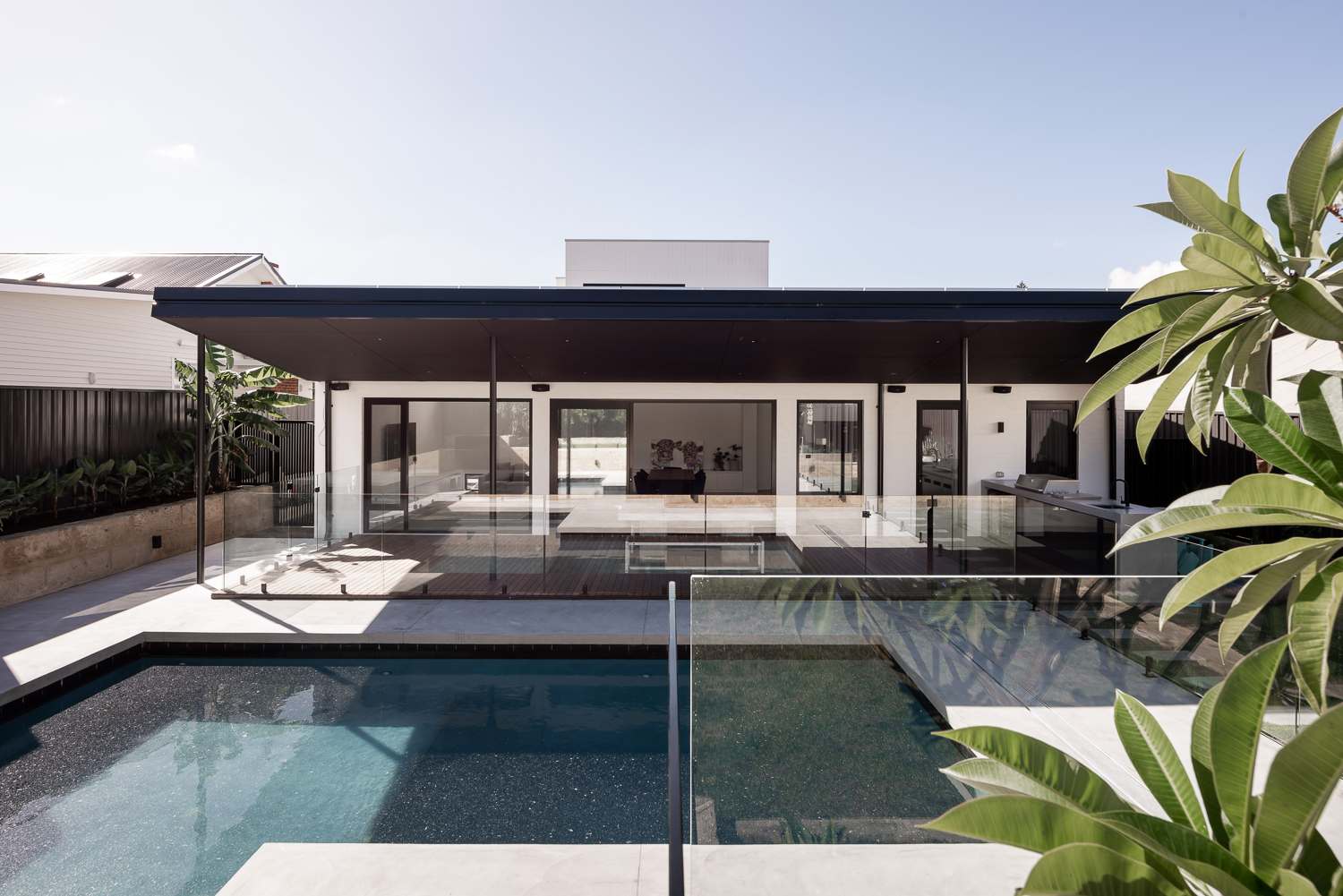
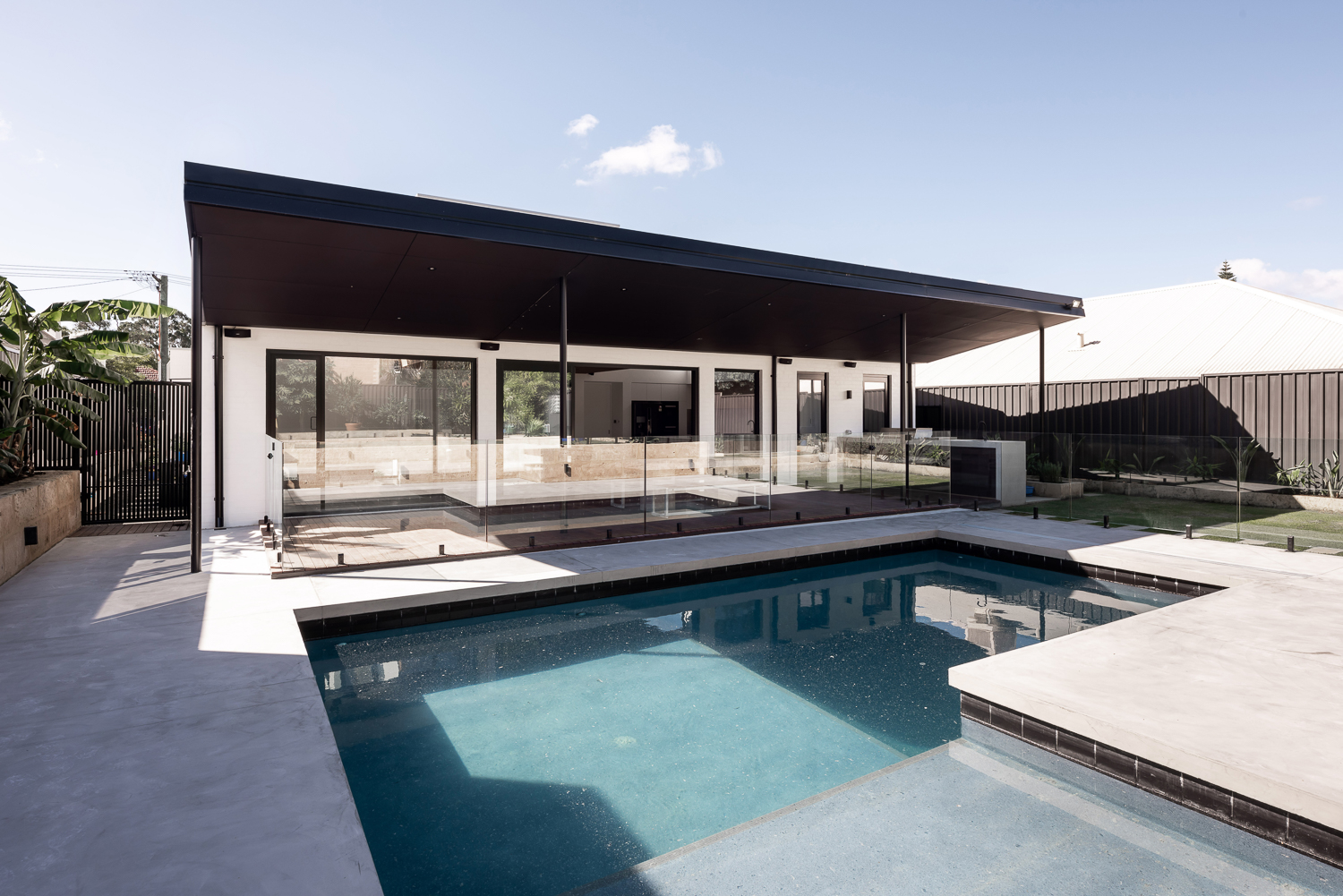
Externally, the alfresco ceiling is painted black, allowing shadow to visually dissolve the ceiling plane and create a richness often associated with significantly more expensive construction techniques. This simple move creates a sophisticated entertaining environment while remaining highly economical.
Similarly, the dark-finished swimming pool increases the perceived depth of the water and captures reflections of the architecture, landscape and sky, transforming a conventional backyard feature into a defining architectural element.
Throughout the residence, resources have been carefully directed towards elements that provide genuine value to everyday life: natural light, spatial quality, environmental performance, flexible planning and durable materials. The result is a home that feels considerably more expensive than its construction budget suggests.
Architecture Through Simplicity
At its core, the Muniz Residence is a project about achieving more with less.
Drawing upon Floreat’s modernist legacy, responding intelligently to climate and carefully considering the rhythms of family life, the home transforms a relatively straightforward brief into an outcome of remarkable quality. Through clear planning, carefully crafted spaces and an unwavering focus on liveability, the project demonstrates how architecture can deliver enduring value, environmental performance and everyday enjoyment without relying on excess.
The result is a warm, refined and highly functional family home that feels timeless in character, proving that great architecture is often the product of thoughtful decisions applied consistently and intelligently rather than extravagant expenditure.
Specifications
Type
New Residence
Location
Floreat, Western Australia
Completed
2018
Size m2
350m2 inc. Garage
Cost /m2
$2,400
Tender Savings
$128k
Energy Rating
7.5 Star
Builder
Capozzi Building
Structural Engineer
Scott and Associates
Energy Consultants
CADDS Energy
Building Surveyor
Taycon Group
Photos
Dion Robeson
Video Tour