Bodley Residence #2

A contemporary rural home where one sweeping roof brings together landscape, climate, family life and architectural identity.

Bodley Residence II
Margaret River, South-West Western Australia
TL;DR
Located in Margaret River, the Bodley Residence II is a contemporary family home designed for both permanent occupation and holiday living. Created for returning clients following the success of their original residence, the project expands an existing modern dwelling through a carefully integrated addition connected by a colonnade, creating a home capable of adapting to changing family needs over time.
While the floorplan remains deliberately efficient and economical, the architecture is defined by a sweeping sculptural roof that responds to the geometry of the site, existing buildings and surrounding bushland. Beneath it, a series of carefully organised living spaces maximise natural light, views and cross ventilation while responding to the demanding climate and bushfire conditions of the region. The result is a home where architectural expression, environmental performance and connection to place emerge from a single clear idea.
A Home Designed for Flexibility
Designed to function equally well as a holiday retreat or permanent residence, the home balances large family gatherings with everyday practicality.
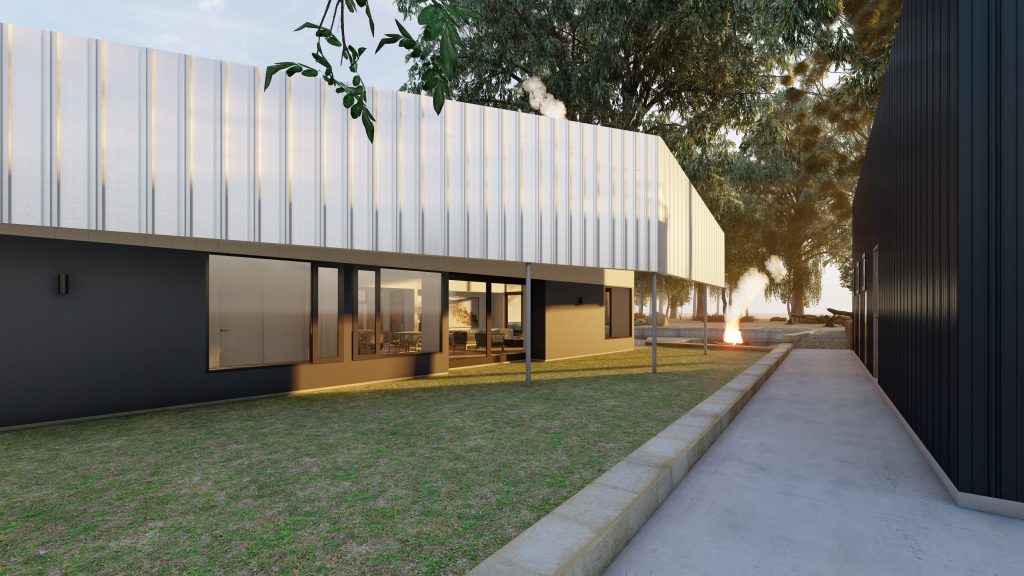
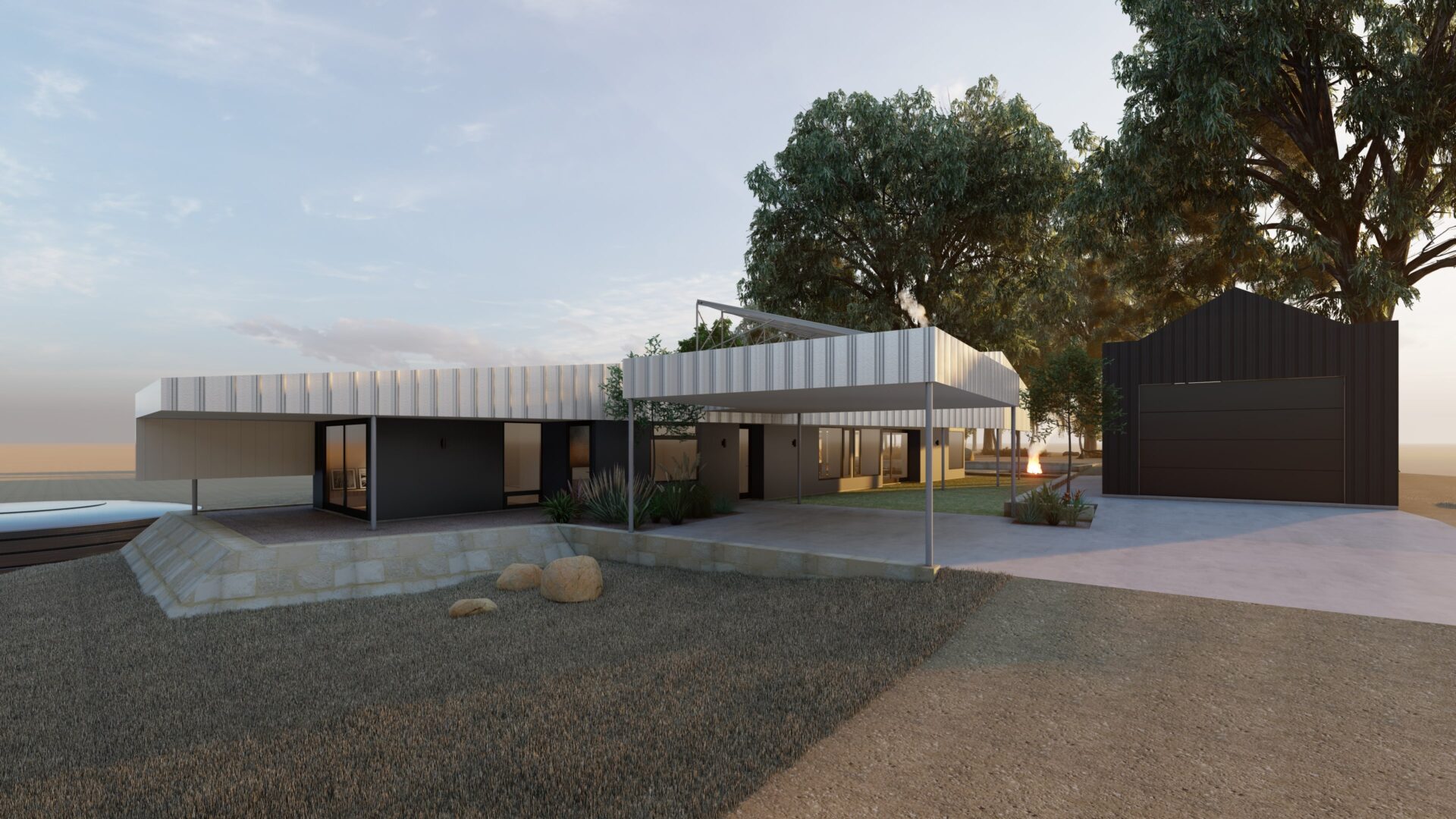
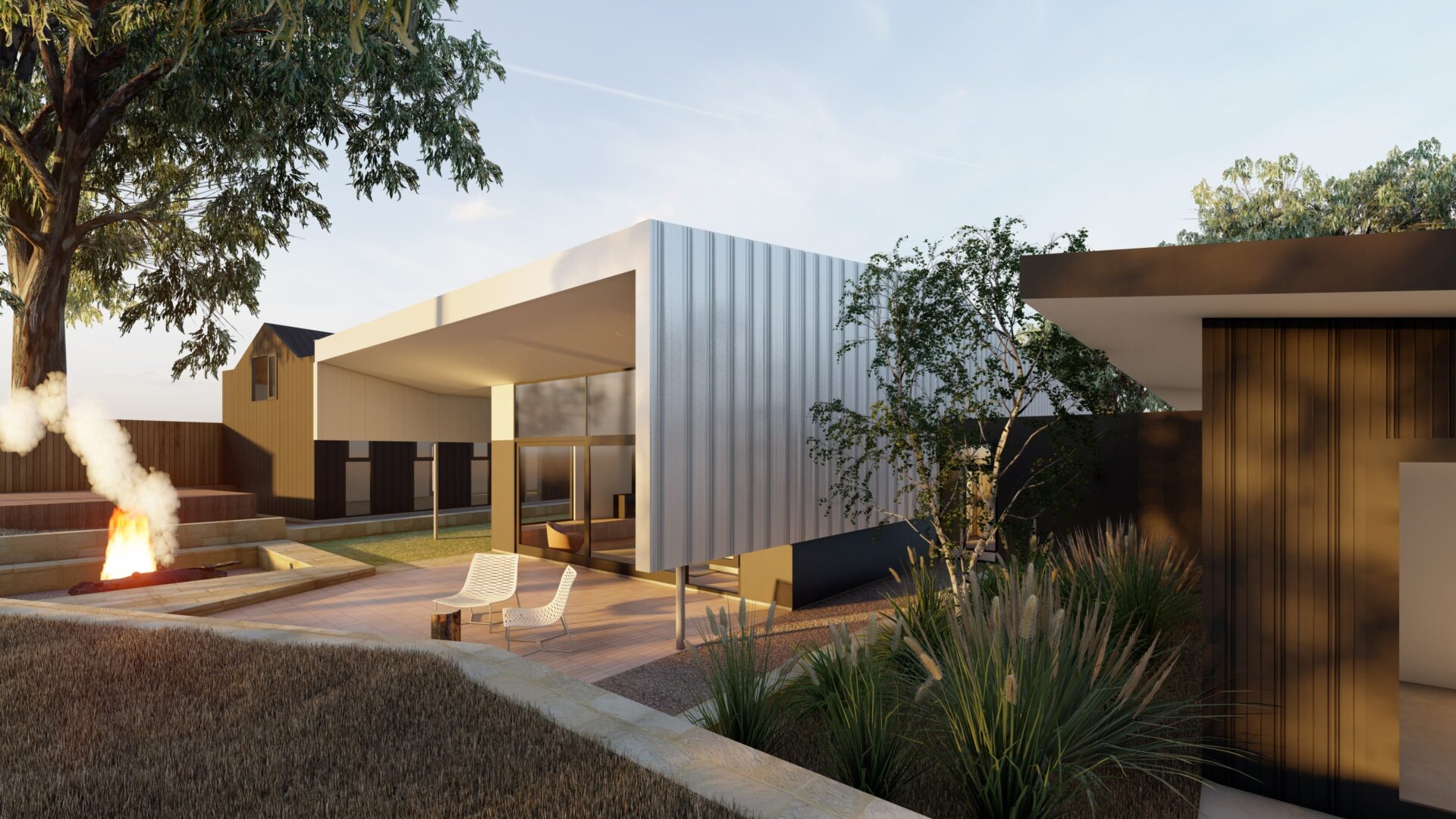
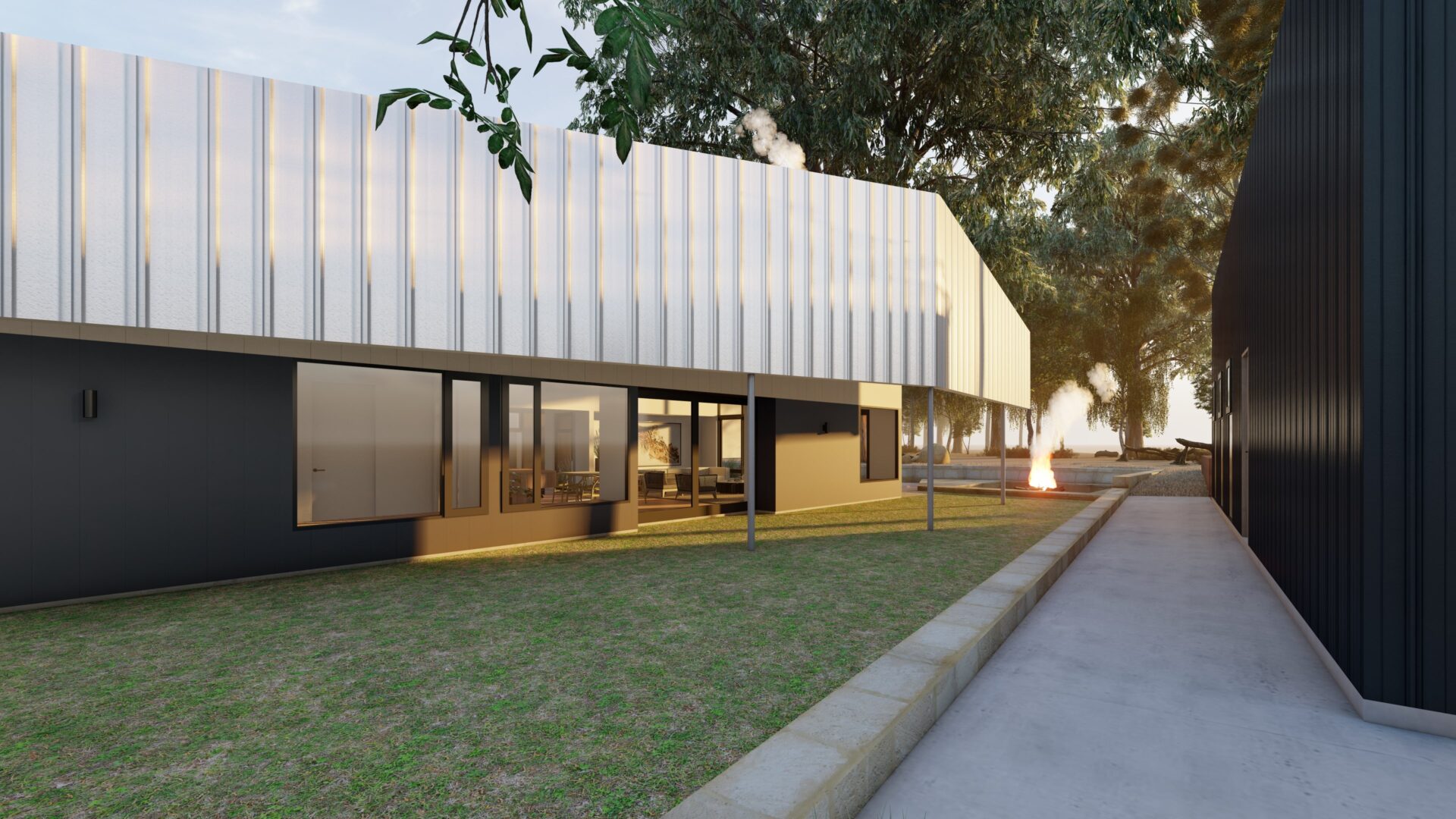
The addition connects to an existing residence through a covered colonnade, allowing the two structures to operate independently or together as required. This arrangement provides flexibility for changing patterns of occupation while maintaining a strong connection across the site.
A Roof Shaped by Place
The defining architectural gesture is the roof.
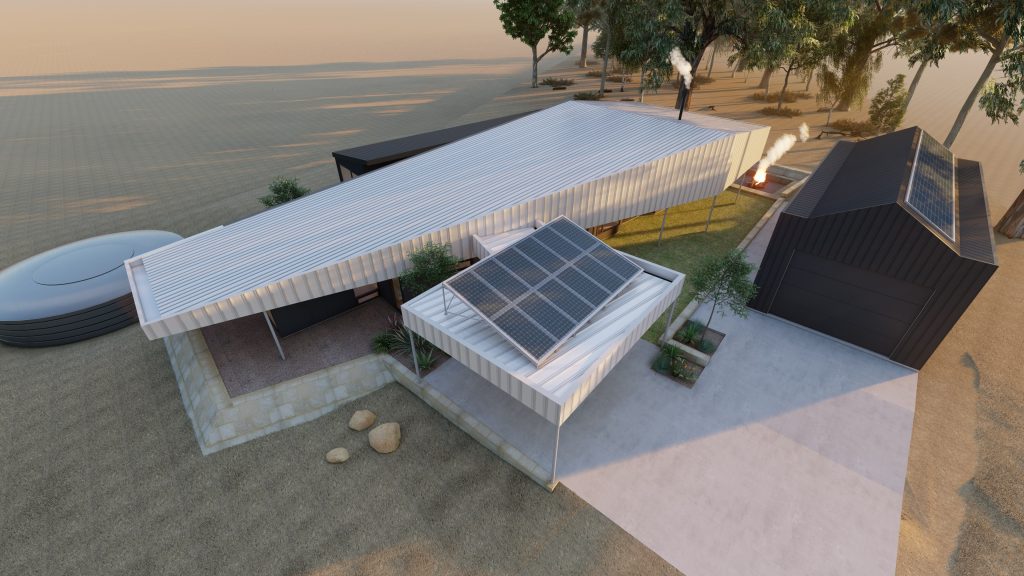
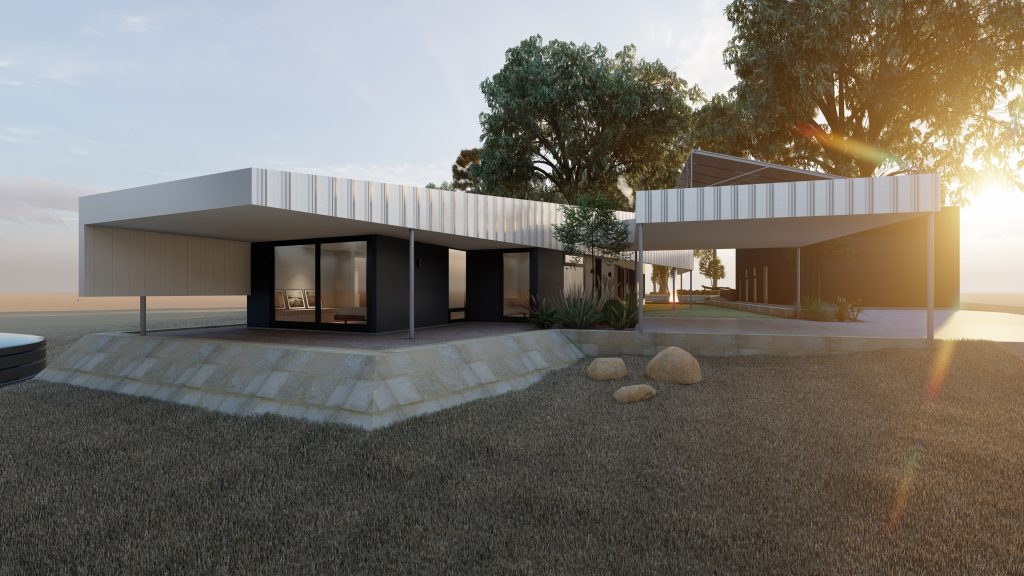
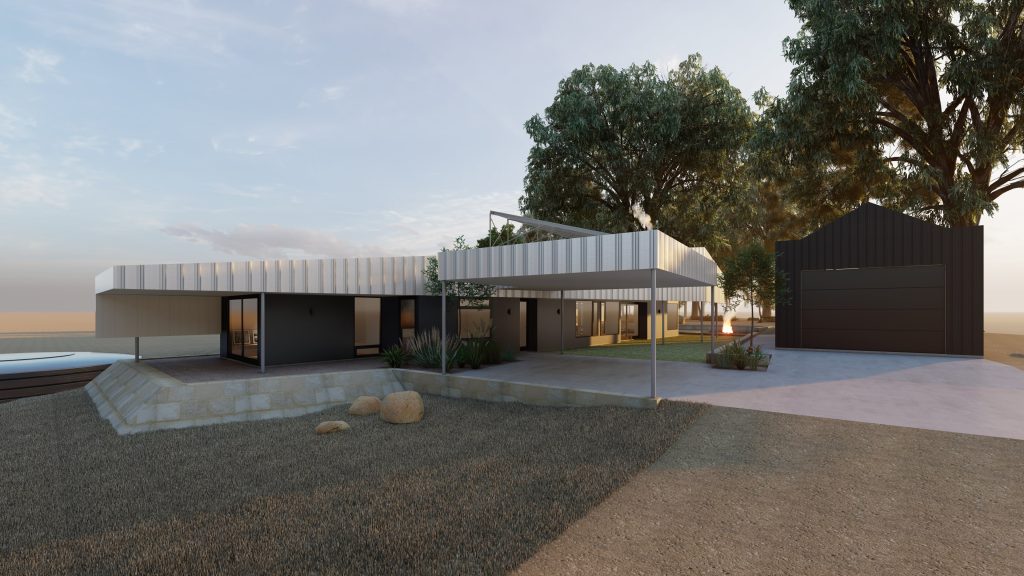
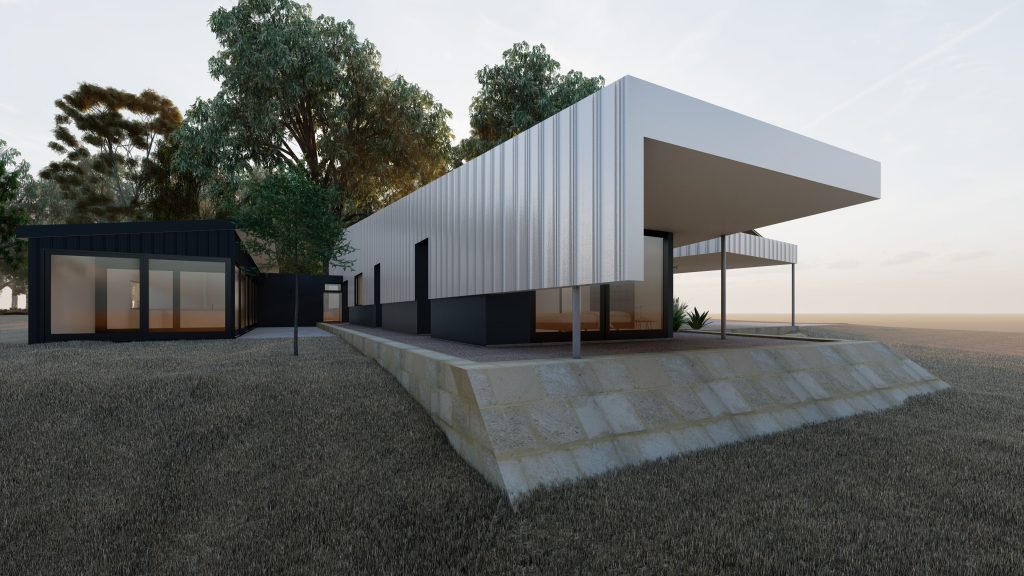
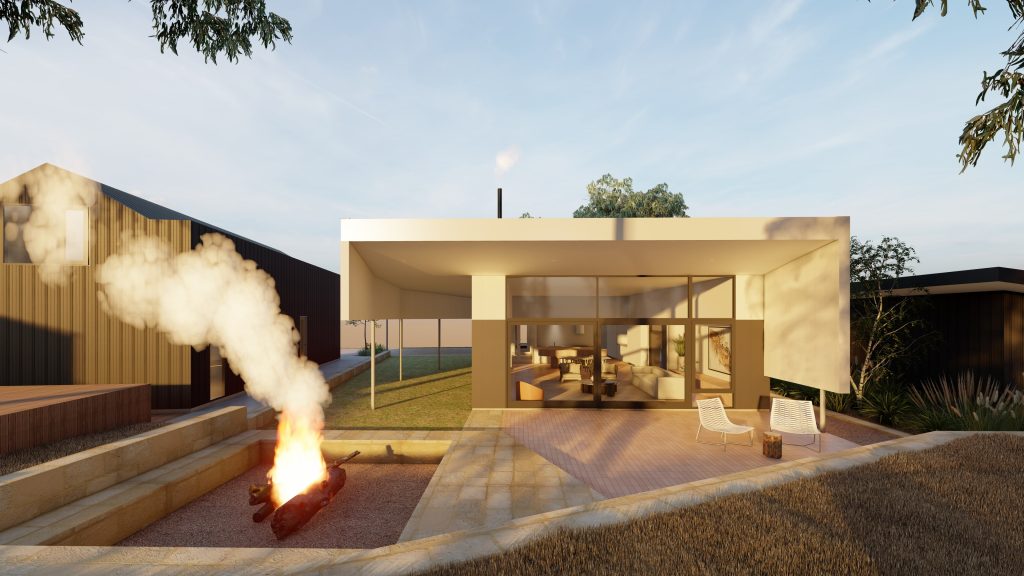
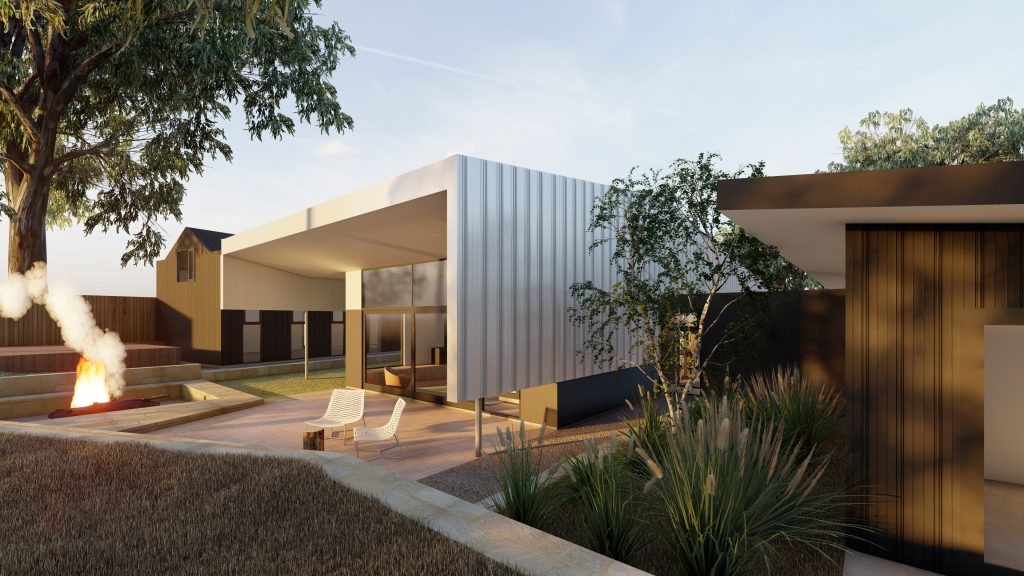
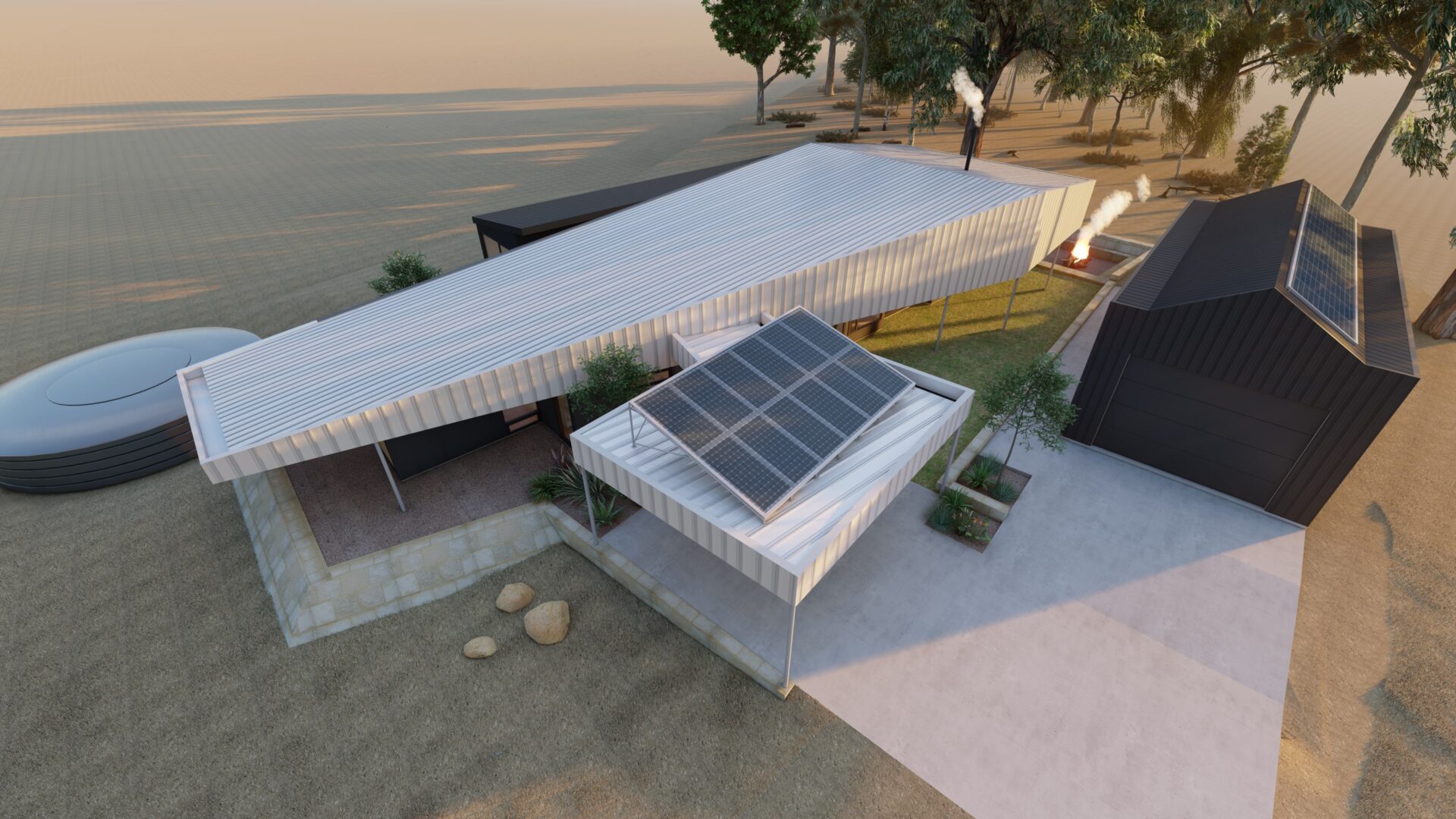
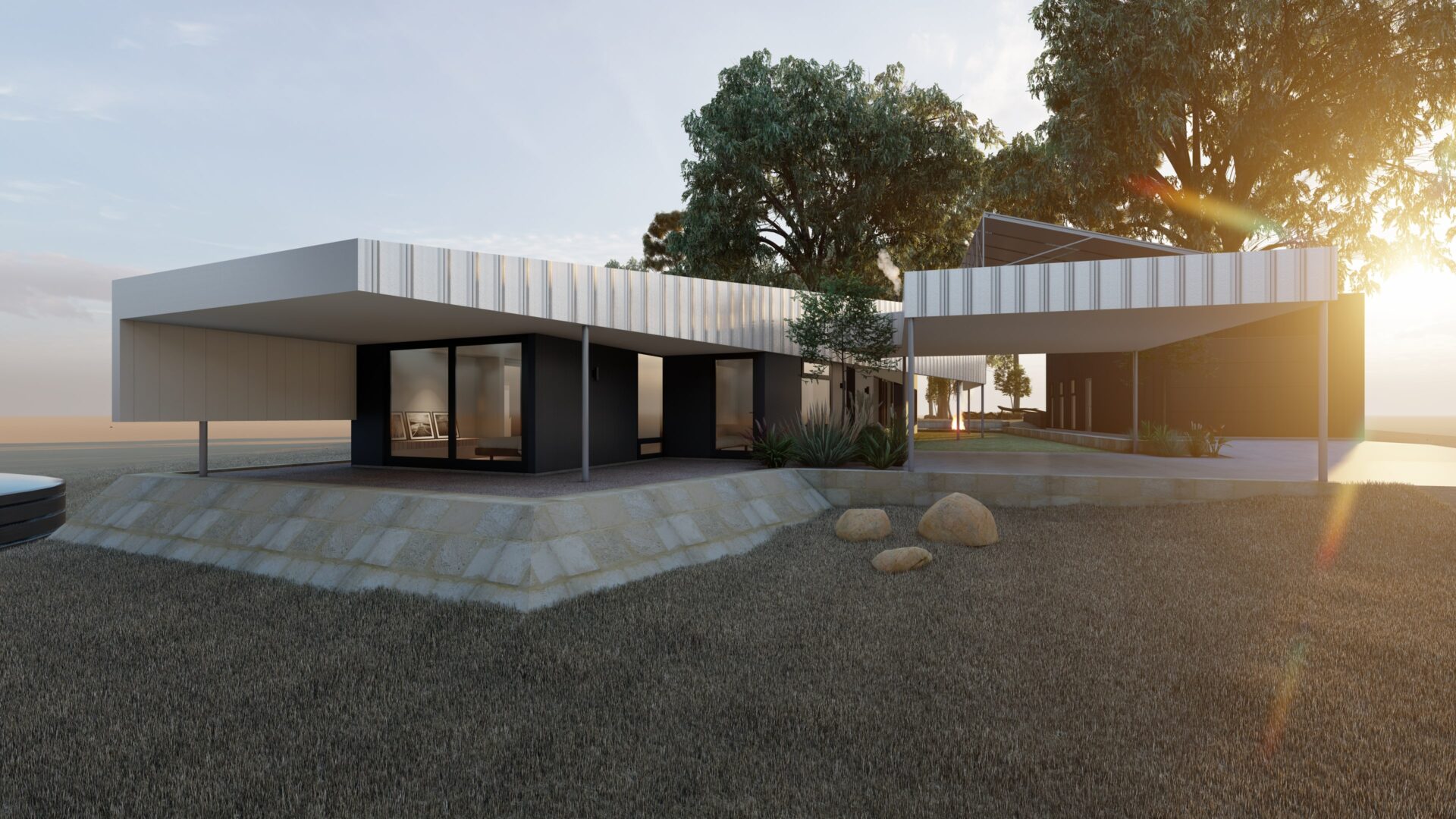
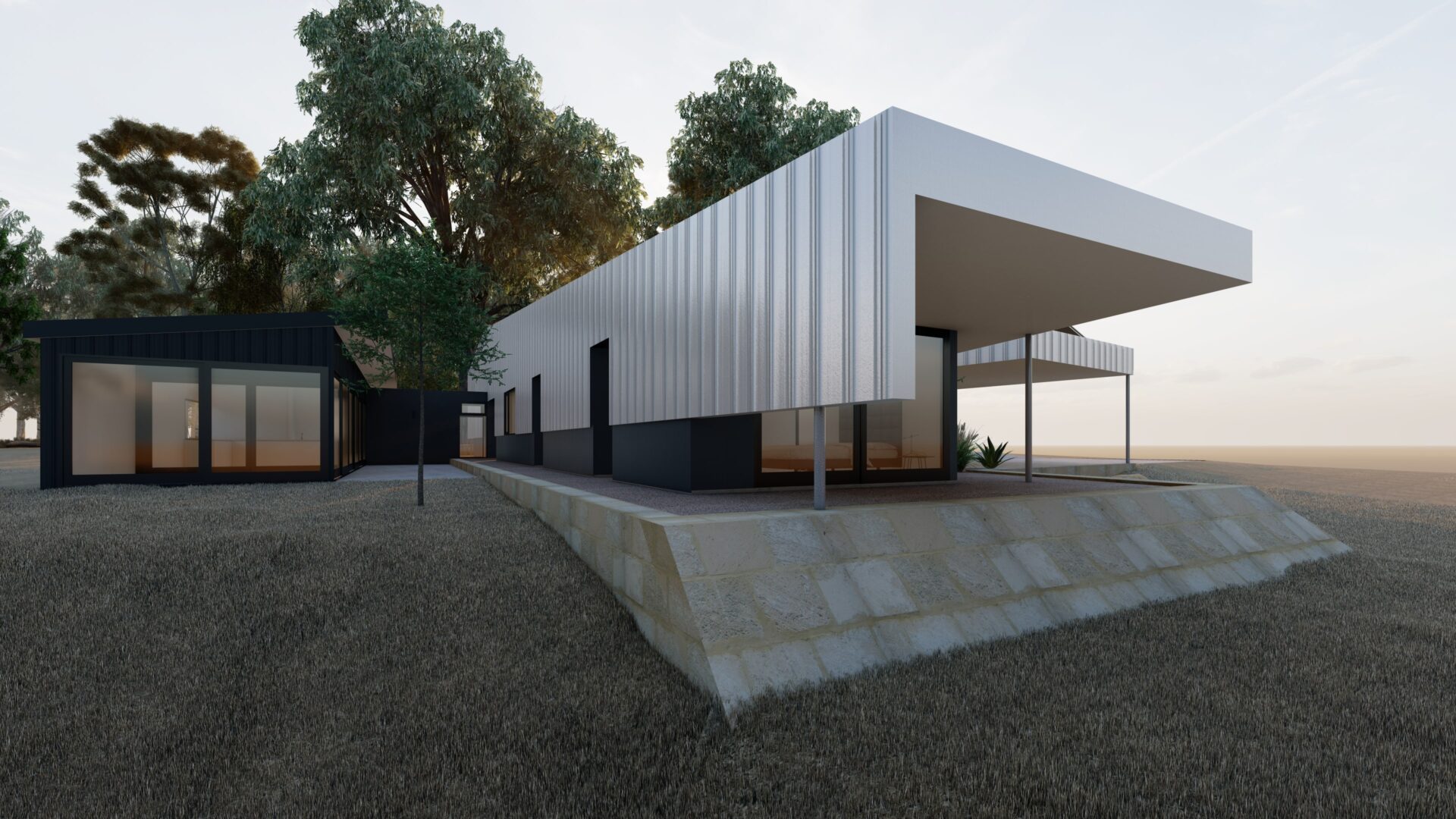
Sweeping between the existing house and shed, the roof responds directly to the unique geometry of the site. Extending well beyond the northern walls, it provides integrated solar protection while establishing the building’s identity within the landscape.
Viewed from a distance, the roof reads almost as a secondary landform. Its long folded form sits comfortably within the surrounding topography, creating a home that feels embedded within its rural setting rather than imposed upon it.
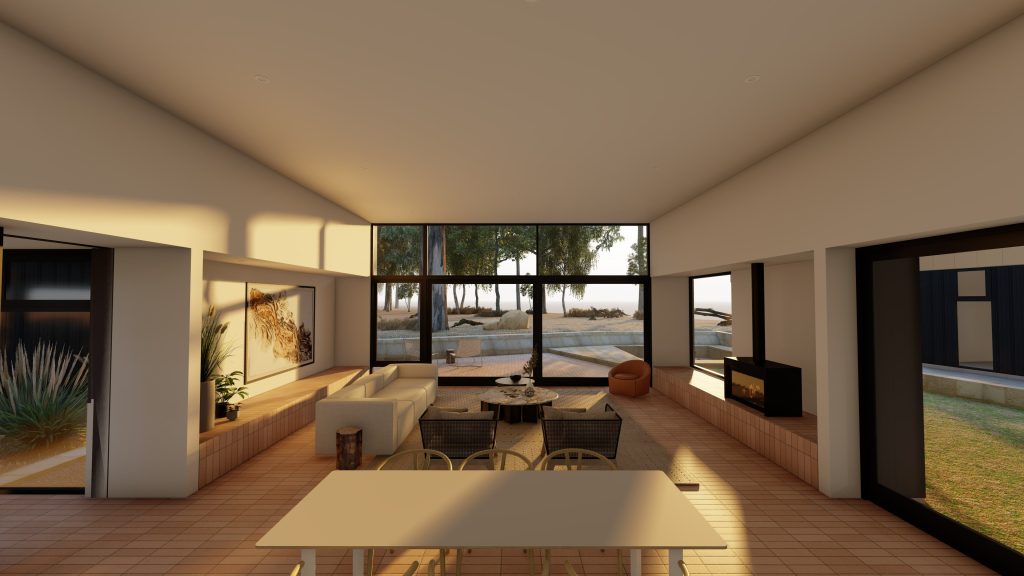
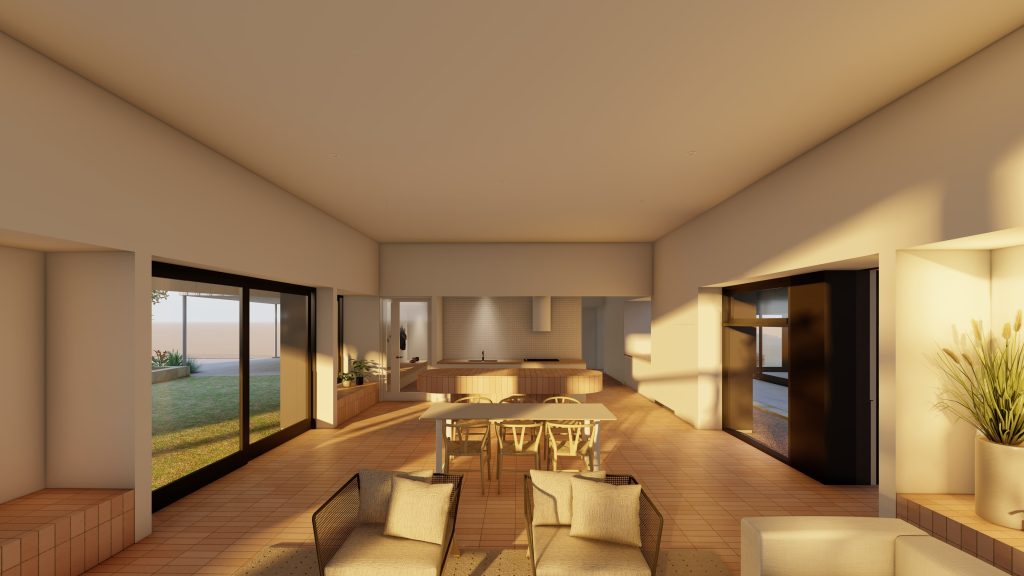
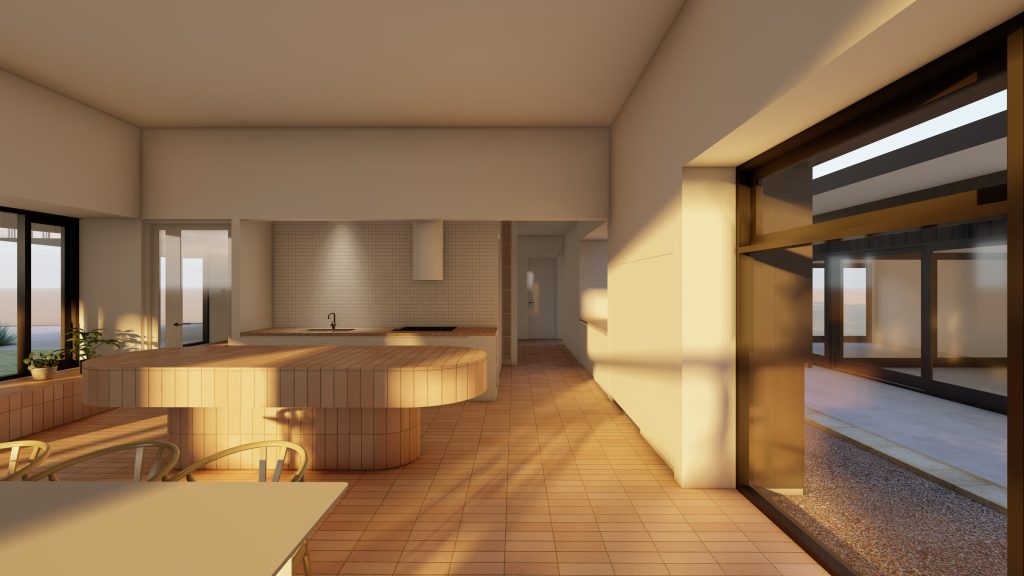
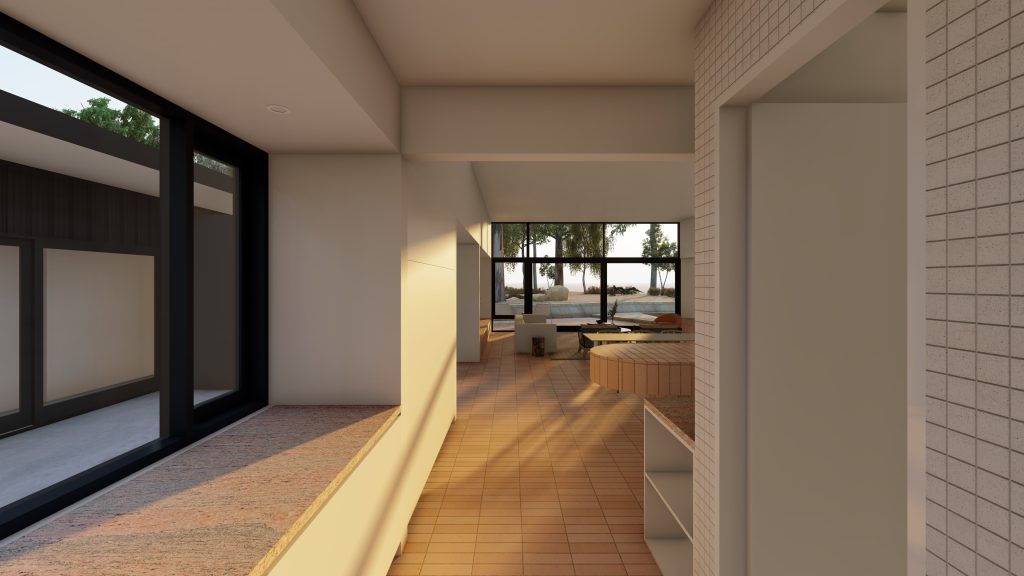
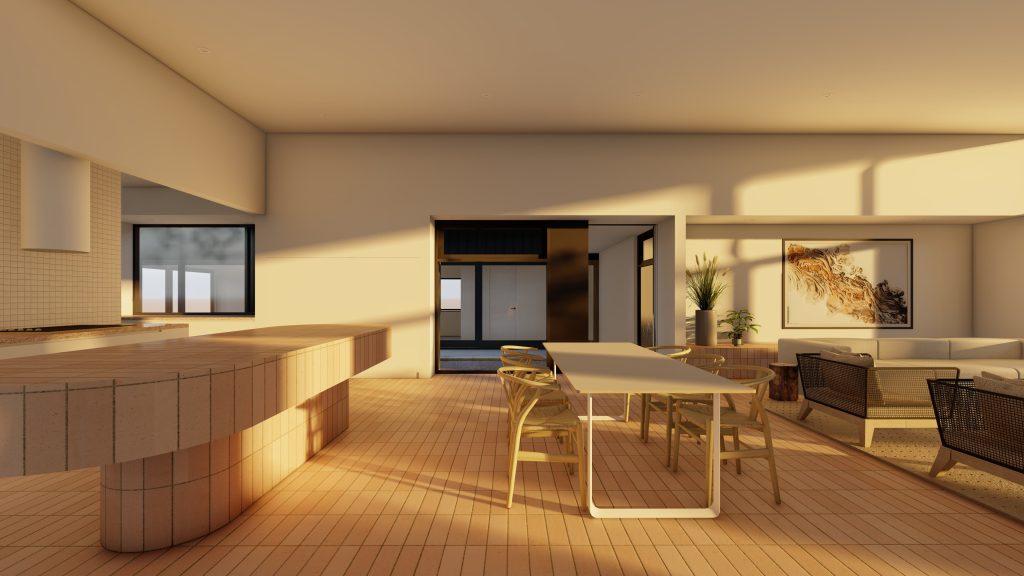
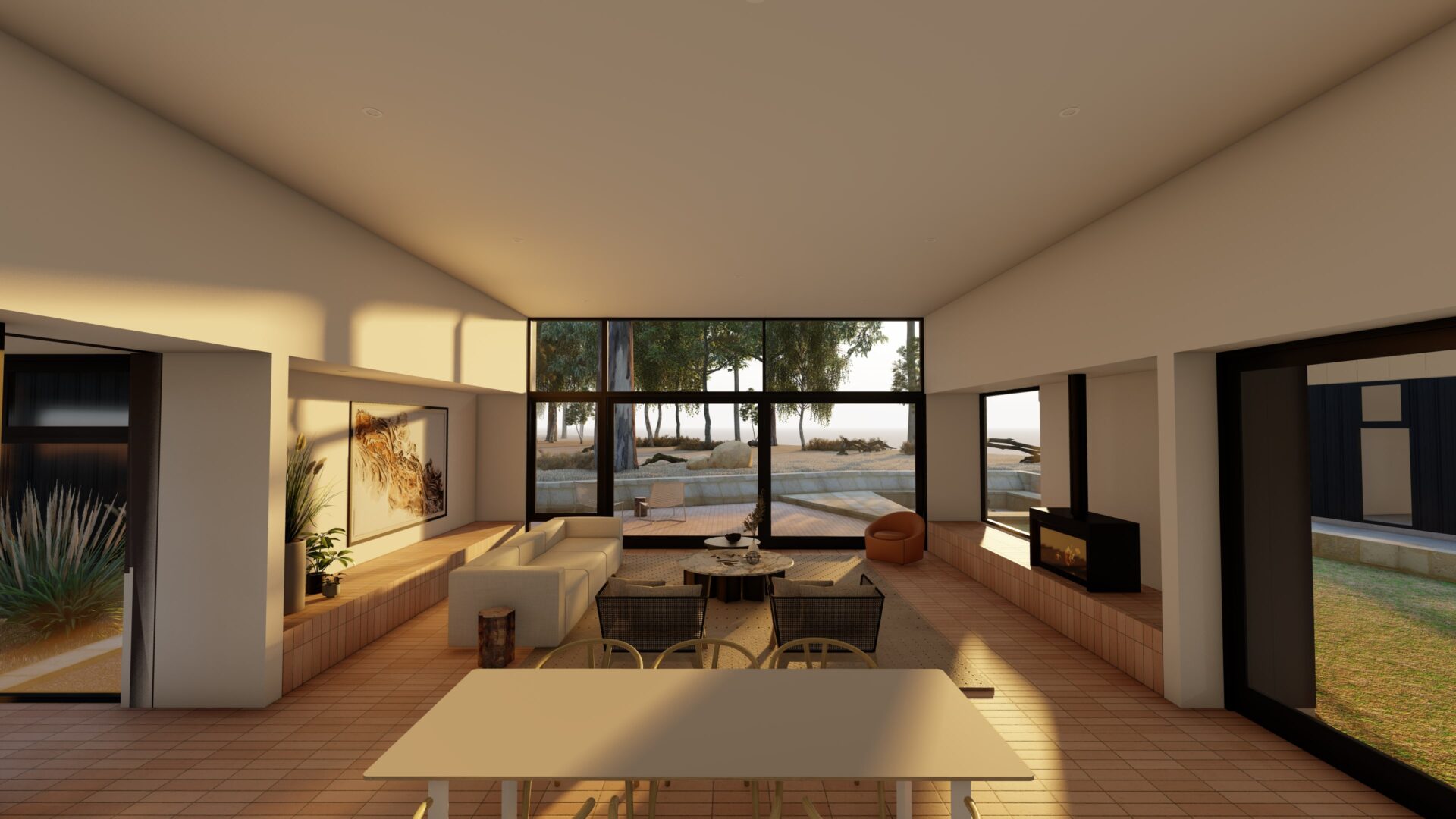
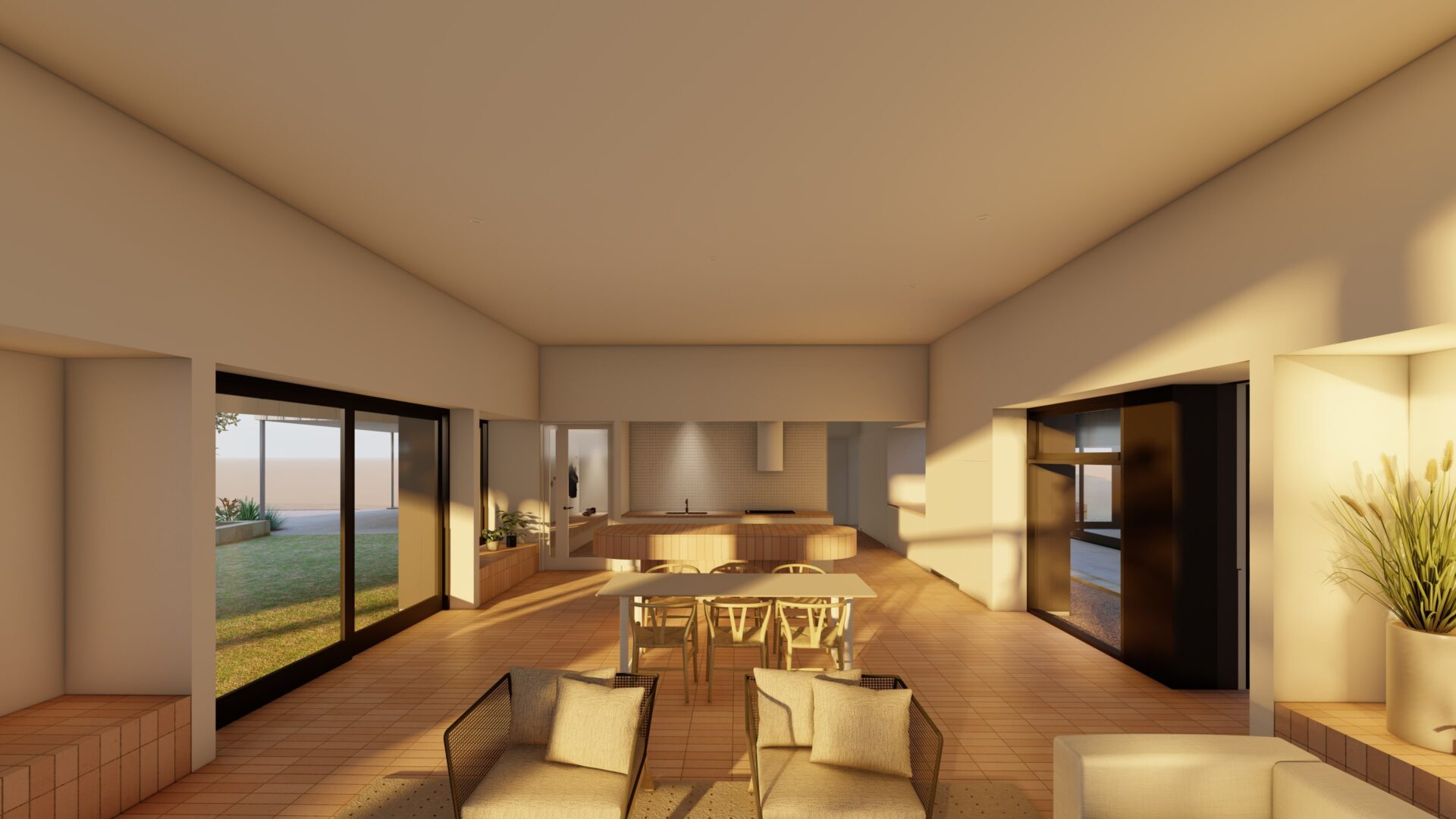
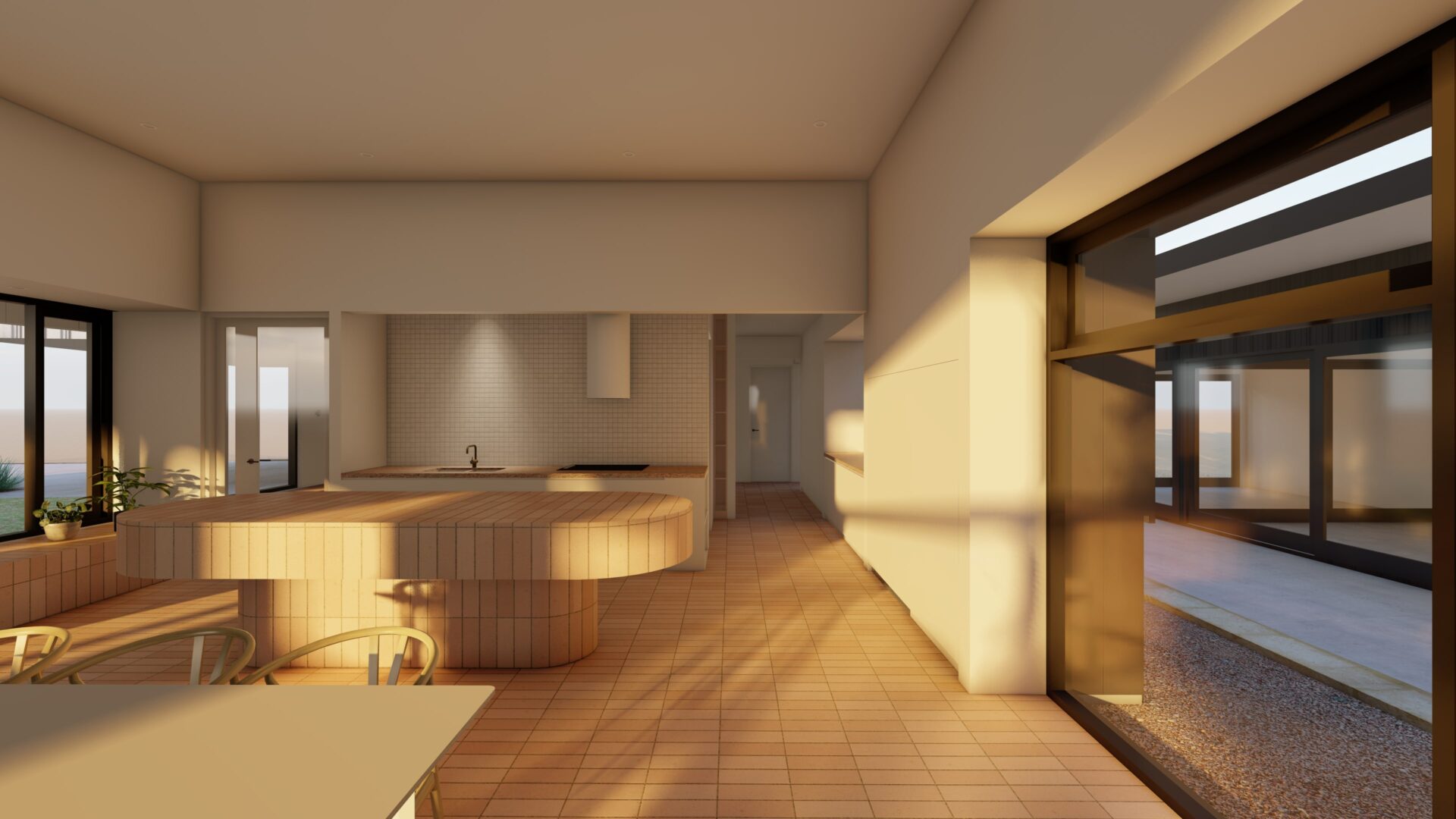
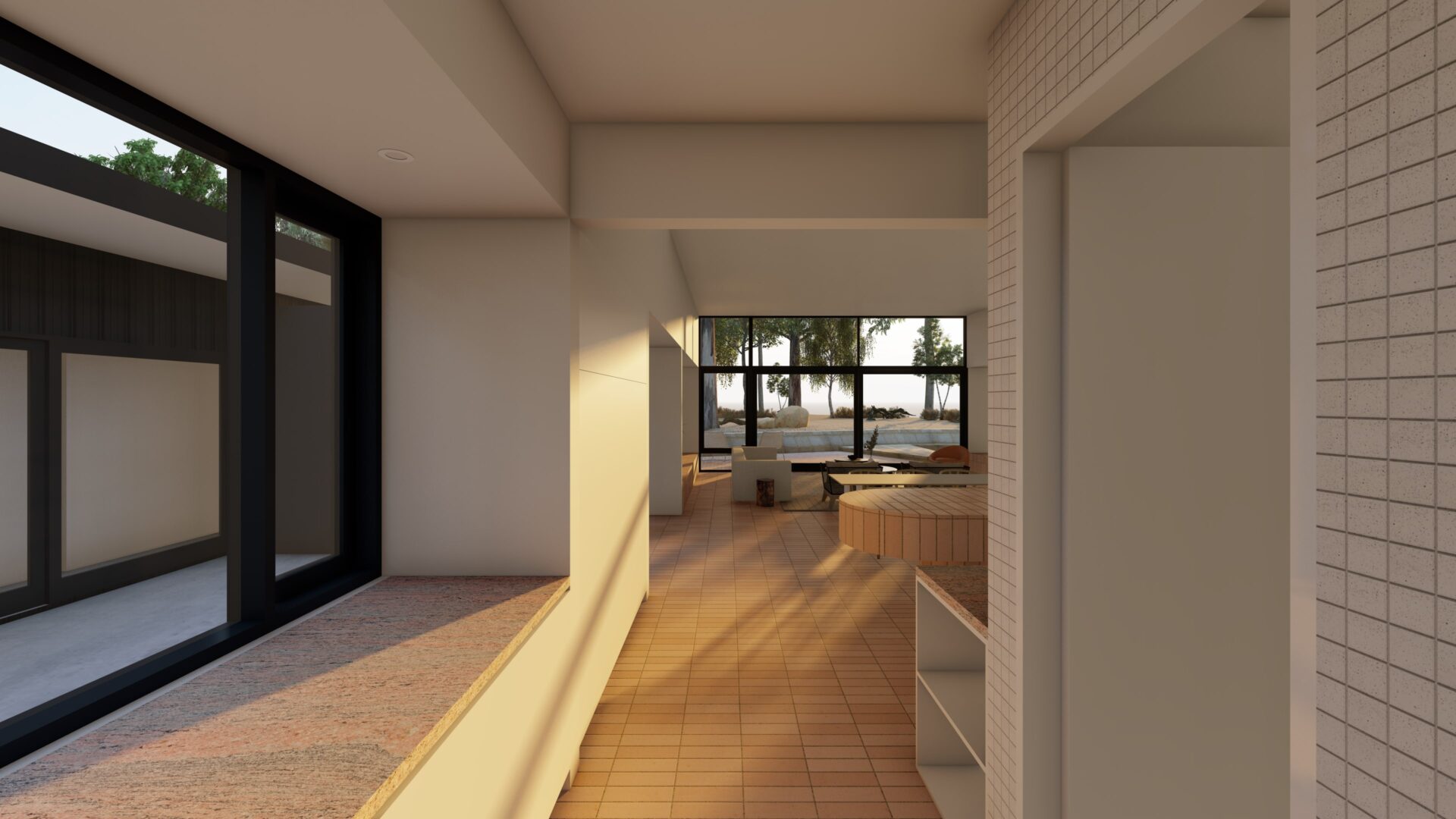
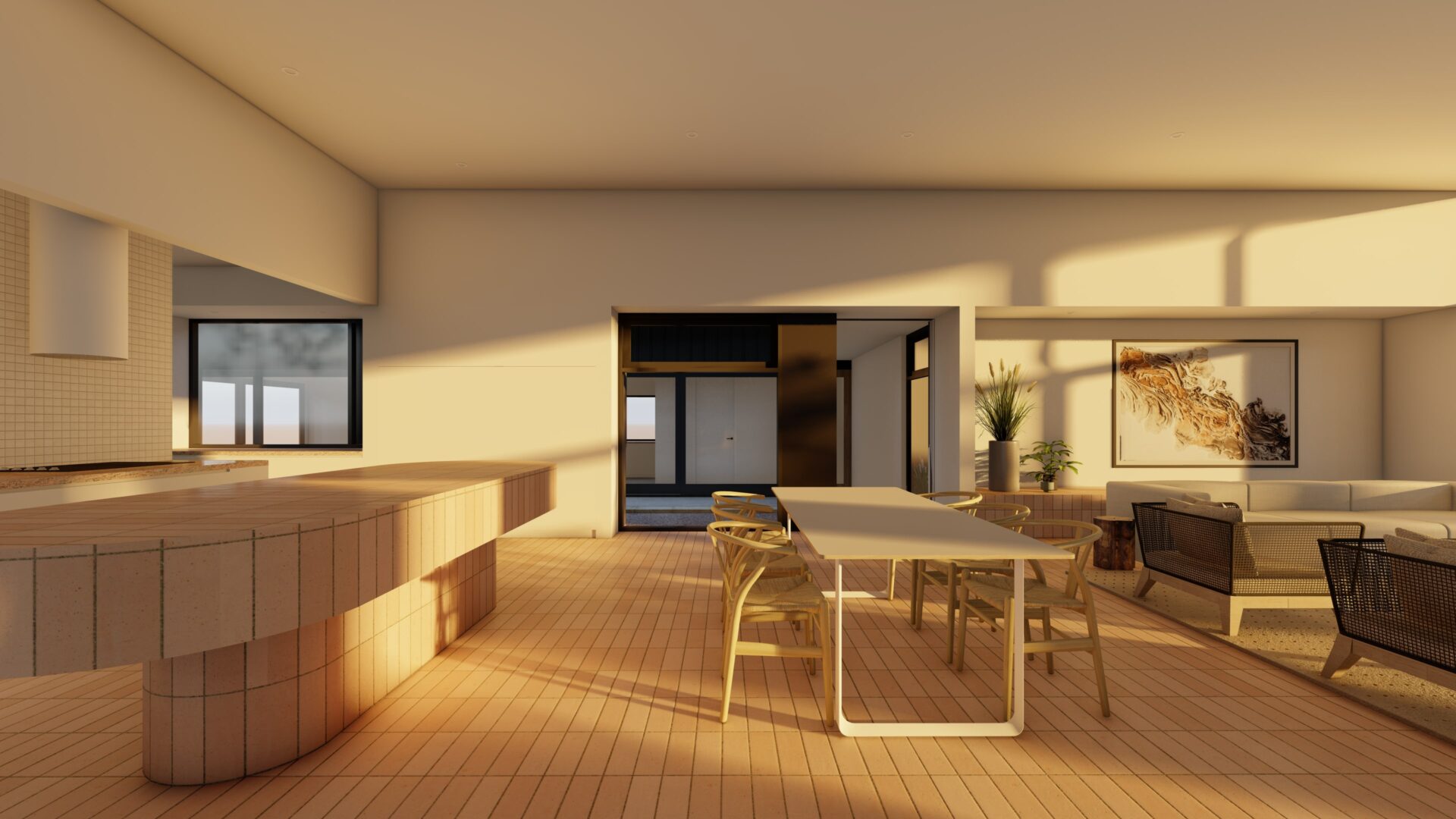
Beneath the roof, dramatic internal volumes are created within the kitchen, dining and living spaces, bringing light, scale and generosity to the heart of the home.
Planning Through Section
While the floorplan is intentionally simple, the spatial experience is shaped through section, outlook and compression.
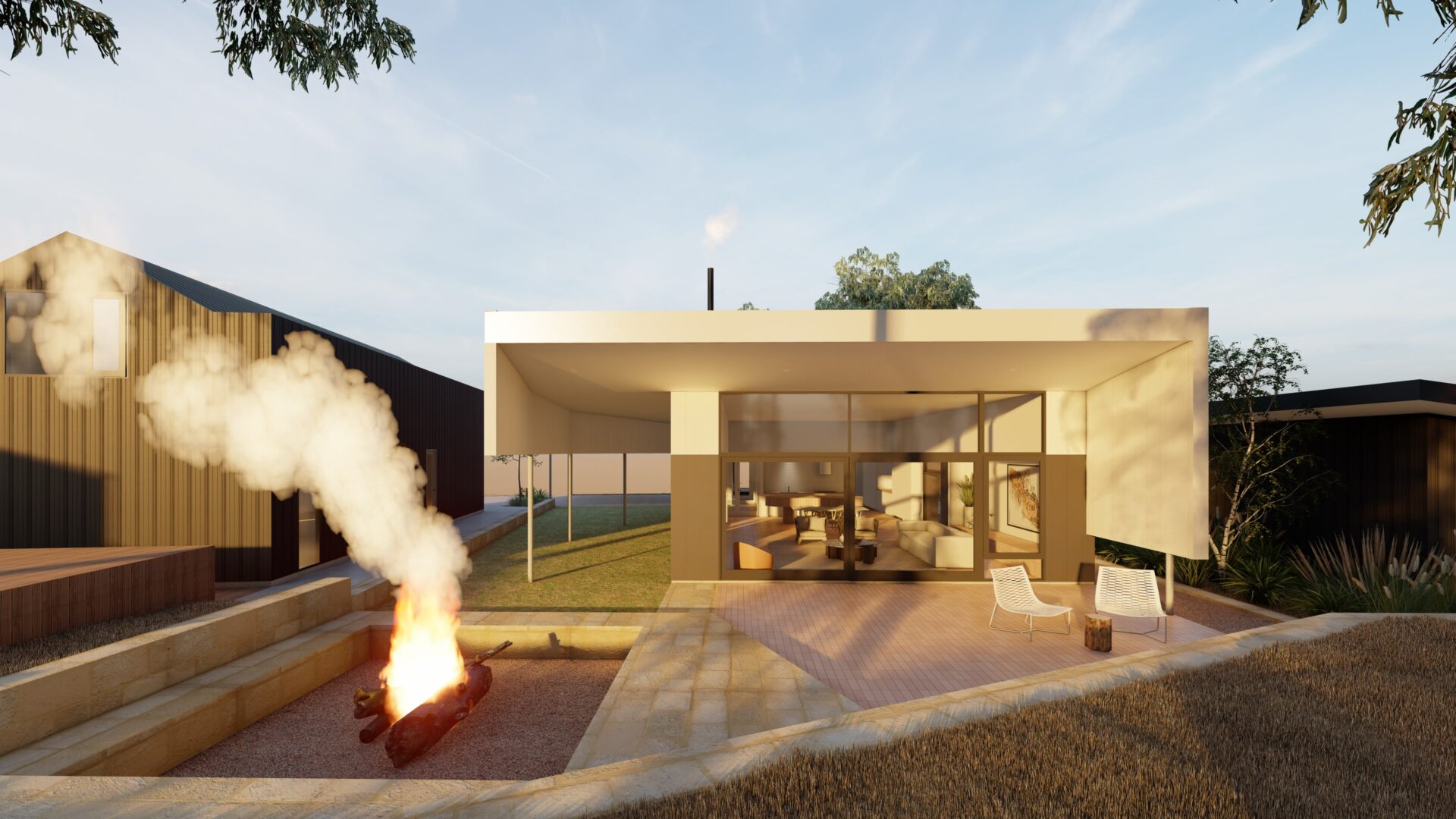
The communal living spaces occupy the highest portion of the roof, creating expansive volumes and large openings to the surrounding bushland. Full-height windows are carefully proportioned to reflect the scale of the established trees beyond, turning the landscape into the defining feature of the interior experience.
In contrast, the master suite occupies the lower end of the roof form. Here the ceiling compresses slightly, creating a more intimate and grounded atmosphere while maintaining strong visual connections to the landscape. Clear linear sightlines reinforce the transition between private and communal zones.
Living Around the Perimeter
The planning strategy reserves the perimeter of the home for occupation and outlook.
Living spaces, bedrooms and circulation zones wrap the edges of the plan, maximising access to natural light, cross ventilation and views. More utilitarian functions, including the pantry, laundry, powder room and storage spaces, are consolidated internally.
This arrangement creates a subtle relationship between architecture and landscape, ensuring the site remains constantly present within the experience of the home.
Lightweight, Robust and Responsive
Although the building presents with a substantial architectural presence, it is constructed primarily through lightweight systems selected for both performance and efficiency.
Deeply recessed openings create a sense of permanence and solidity while improving solar protection and weather performance. High levels of insulation, carefully designed northern shading and lightweight construction deliver a highly efficient building envelope suited to the climate of the region.
Bushfire requirements were similarly integrated into the architecture from the outset. Rather than being applied as a series of upgrades, the BAL-rated design informed material selection, detailing and building form from the earliest stages of the project.
Landscape as Transition
The residence sits upon a carefully modelled plinth that mediates between the built form and the surrounding bushland.
Battered limestone retaining walls and landscaped edges soften the transition between the native landscape and the more controlled environments immediately adjacent to the house. Existing vegetation remains the defining characteristic of the site, with architecture and landscape working together to frame and celebrate it.
A detached carport extends this strategy, creating its own series of angular forms that reinforce the sculptural quality of the architecture while contributing to the overall composition of the site.
Architecture Through Simplicity
The Bodley Residence II demonstrates how a simple plan can support a rich architectural outcome.
By concentrating complexity within the roof form, sectional experience and relationship to landscape, the project achieves a strong architectural identity without unnecessary complication. The result is a home deeply connected to Margaret River, balancing family life, environmental performance and architectural expression through a single, coherent architectural idea.
Specifications
Type
Major Addition
Location
Margaret River, South West WA
Completed
ETC 2026
Size m2
200m2 + 90m2 existing + shed + carport
Cost /m2
TBC
Tender Range
TBC
Energy Rating
7+ Stars
Builder
Owner
Structural Engineer
Cenit Group
Energy Consultants
Advance Energy
Building Surveyor
Taycon Group
Renders
Superseed Architecture